From domestic townhouses to grand castles and mysterious follies this conservation charity has an extraordinary collection of historic buildings available for unique holidays. Alongside their lettings business though, open days are a vital part of their charitable purpose of engaging people with these sites and the, often award winning, restoration work it took to save and convert them for modern use. For over 15 years Heritage Open Days has been helping them do just that, providing a supportive central platform to raise awareness of their work, recruit new supporters, and sometimes staff too!
As a building conservation charity that restores historic buildings at risk and makes them available for short breaks, a core charitable object of the Landmark Trust is to promote the enjoyment of historic buildings, and Heritage Open Days (HODs) does exactly that for us. The festival has become a key part of my year, and being able to run events on the day and see the reaction and impact it has makes it a really rewarding part of my job.
Fans & good neighbours
As our buildings are usually occupied by holiday guests, open days provide an opportunity for the public to gain access to some extraordinary places in our care. Some of our steadfast supporters, ‘Landmarkers’, will travel all over the country to visit a Landmark that’s very rarely opened. The local communities around our buildings are also really important to us – many people have connections to our buildings that go back generations. The open days help maintain good relationships and we like to make our neighbours feel welcome and connected to their local history.
Really nice to see something on our doorstep but we have never visited before.
Visitor
2025
What we do for HODs
For HODs we usually open around 15 Landmarks across England that include priories, follies, castles, towers and forts. There are around 90 Landmark staff who support the events, so it’s a big collective effort: Housekeepers, Property Managers, Surveyors, Librarians, and other office staff. We also have a very small volunteer pool who support. At the same time, we also open Landmarks in Scotland and Wales for their equivalent free heritage festivals. Let’s just say that September is really busy!
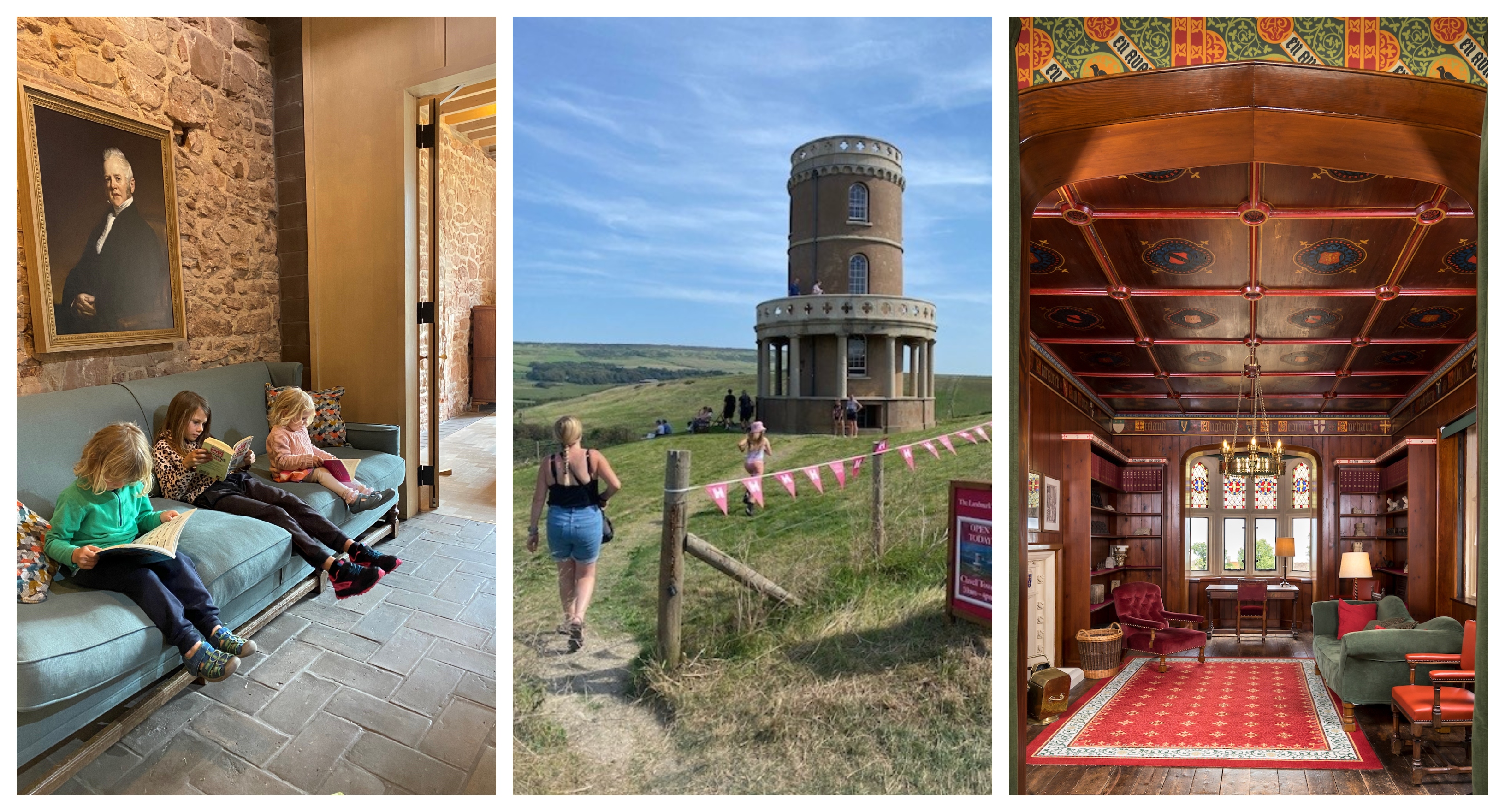
Festival regulars include: Astley Castle's groundbreaking fusion of contemporary architecture with an ancient site; Clavell Tower's mysterious 19th century folly; Pugin's neo-gothic splendour at The Grange.
Choosing sites
A number of Landmark Trust properties were restored using charitable grants that come with conditions for annual public access. For example, RIBA Stirling Prize winner, Astley Castle in Warwickshire; Pugin’s The Grange in Ramsgate; and the adorable Clavell Tower on the Southwest Coast path: all of which are regulars for Heritage Open Days.
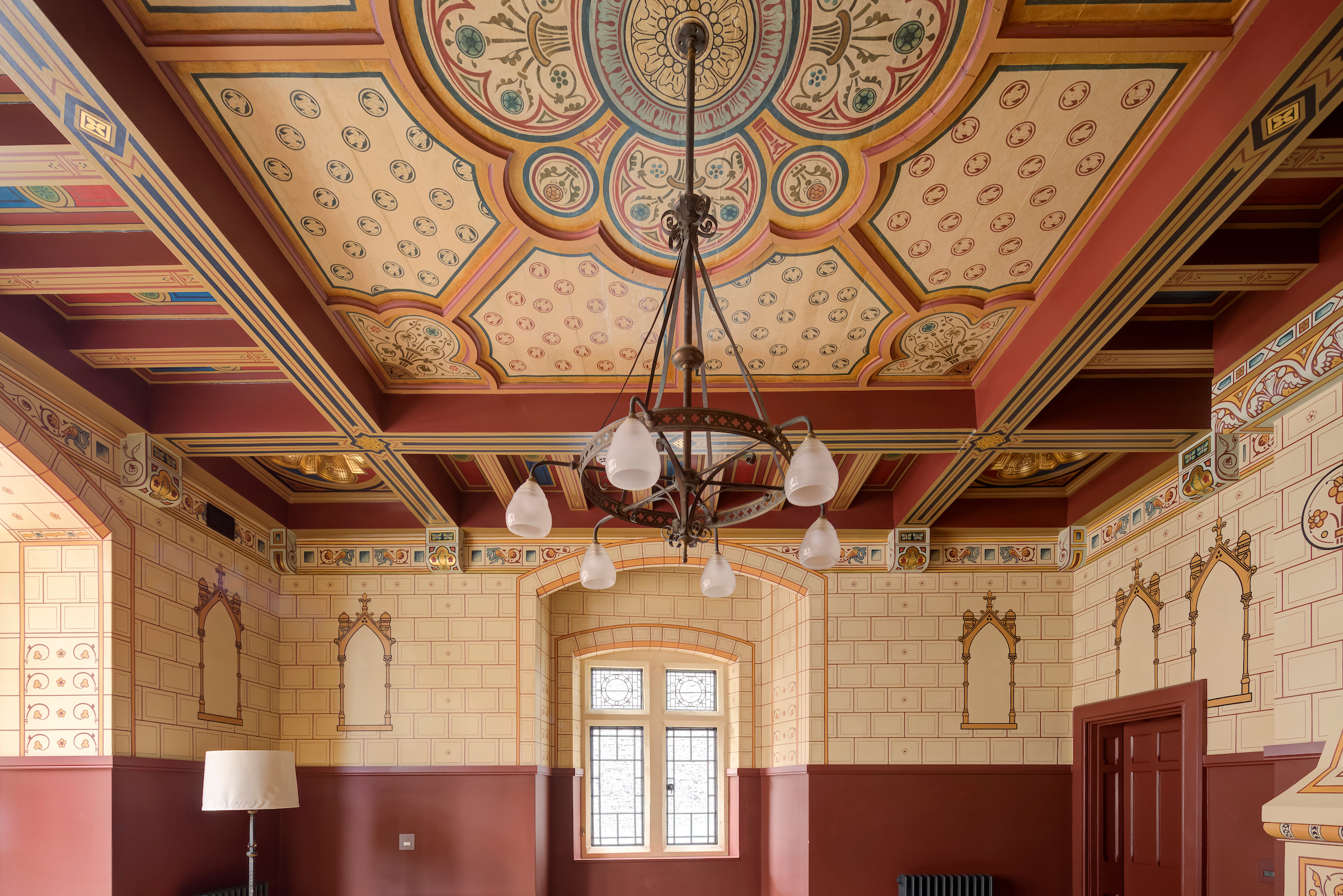
To keep the programme varied each year though, the fun bit is choosing from some of the other wonderful properties, such as a Victorian station, a Georgian folly, or a coastal sea fort. We often have the opportunity to showcase freshly-restored buildings with gleaming bathrooms, and powered by renewable energy sources, allowing the public to visit for the first time. Last year, that was The Station Agent’s House in Manchester, and this year we opened Gothic Revival inspired, The Mayor’s Parlour, in Dover’s town hall.
The Mayor’s Parlour at Masion Dieu in Dover was a new opening this year after undergoing an impressive refurbishment.
Adding interest
An important part of the planning and where I really get to tap into my professional experience, is creating opportunities for visitors to engage with our buildings in a different way. This we do through offering workshops, activities, tours and live performances that make the events more memorable and encourage new or return visits.
This year at Calverley Old Hall, a major recent project for us between Leeds and Bradford, we welcomed back several key people who worked on the project, to align with the HODs theme of Architecture. Karen Lim from Cowper Griffith Architects shared insights and revealed design decisions with visitors; rising craft skills star and young bricklayer, Ellie Jae Dobson, gave demonstrations of building repair techniques. Meanwhile in the Community Space, we ran a drop-in stop motion animation activity with InspirEd Workshops that studied architectural features of Calverley Old Hall, that we hope to turn into an animated projection work.
Craft activities inspired by the building help visitors, particularly children, engage with Calverley Old Hall over Heritage Open Days.
We most enjoyed being able to explore the whole building and talk to the helpful friendly staff who gave insights and history.
Visitor
2025
The difference it makes
Participating in HODs each year has so many benefits for the Landmark Trust…
It undoubtably enables us to reach new people and spread our mission to protect and preserve historic buildings at risk. Lots of towns have a vibrant HODs programme with so much activity happening in one place and we greatly benefit from some of these networks.
It raises awareness that we’re a charity and helps to create new Landmark supporters.
Internally, it brings widely dispersed colleagues together and the team energy can be great fun. It also helps us recruit new Housekeepers from the local area who visit on an open day.
Best bits
I have so many so here’s my top five:
Families who spend the whole day at one of our sites, bring a picnic, explore the grounds and make themselves at home. A free family day out is becoming a very rare thing, with entry prices to heritage attractions now being out of reach for so many people. Having access to heritage at a young age can leave a lasting impression, and HODs enables families to do that.
Meeting someone who comes through the door who followed the pink signs and has no idea where they are but are curious to find out!
Seeing Landmark Housekeepers who sometimes work alone in what can be a solitary job, glow with pride at sharing their knowledge of the history of the building and seeing so many people enjoy it. I learn so much from them.
When visitors come with their own memories of the building, bring old photos, or say something casually on their way out like, ‘I was born here’! It makes you remember that a building has a life longer than any of us.
Seeing spaces return to their former use or transform with creativity. Last year for HODs, we held a life drawing workshop in the studio of former resident and artist Mary Spencer Watson at Dunshay Manor.
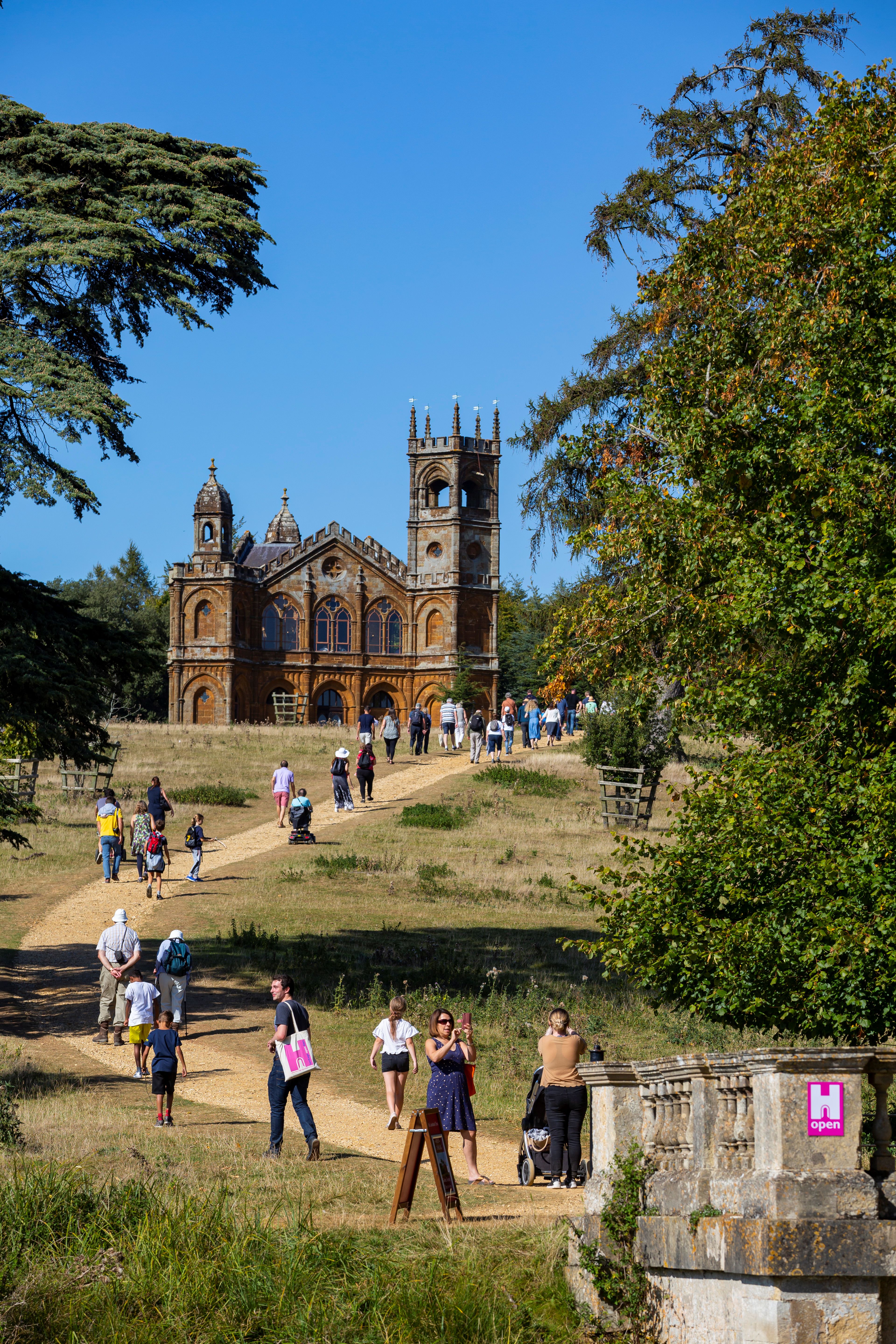
Pink festival signs invite visitors to explore the Gothic Temple at Stowe in Buckinghamshire.
Overcoming challenges
A pretty mundane but important one is parking – we can spend hours talking about parking! For some of our properties we rely on the generosity of our neighbouring farmers to lend us a field for the weekend.
Improving the diversity of our visitors – we want to make all communities feel welcome and show them that this history is for them too. It can take years to form connections and build trust, and we’re not quite there yet. My aim is to broaden the diversity of activities on offer at our events through a wider pool of facilitators.
A common challenge we have is access – due to the nature of our historic buildings, some are not accessible for everyone. We have found other ways to make our events more accessible, such as at Princelet Street in London, where we’ve worked with Heritage Interpreters for the past two years to offer a BSL guide at open days.
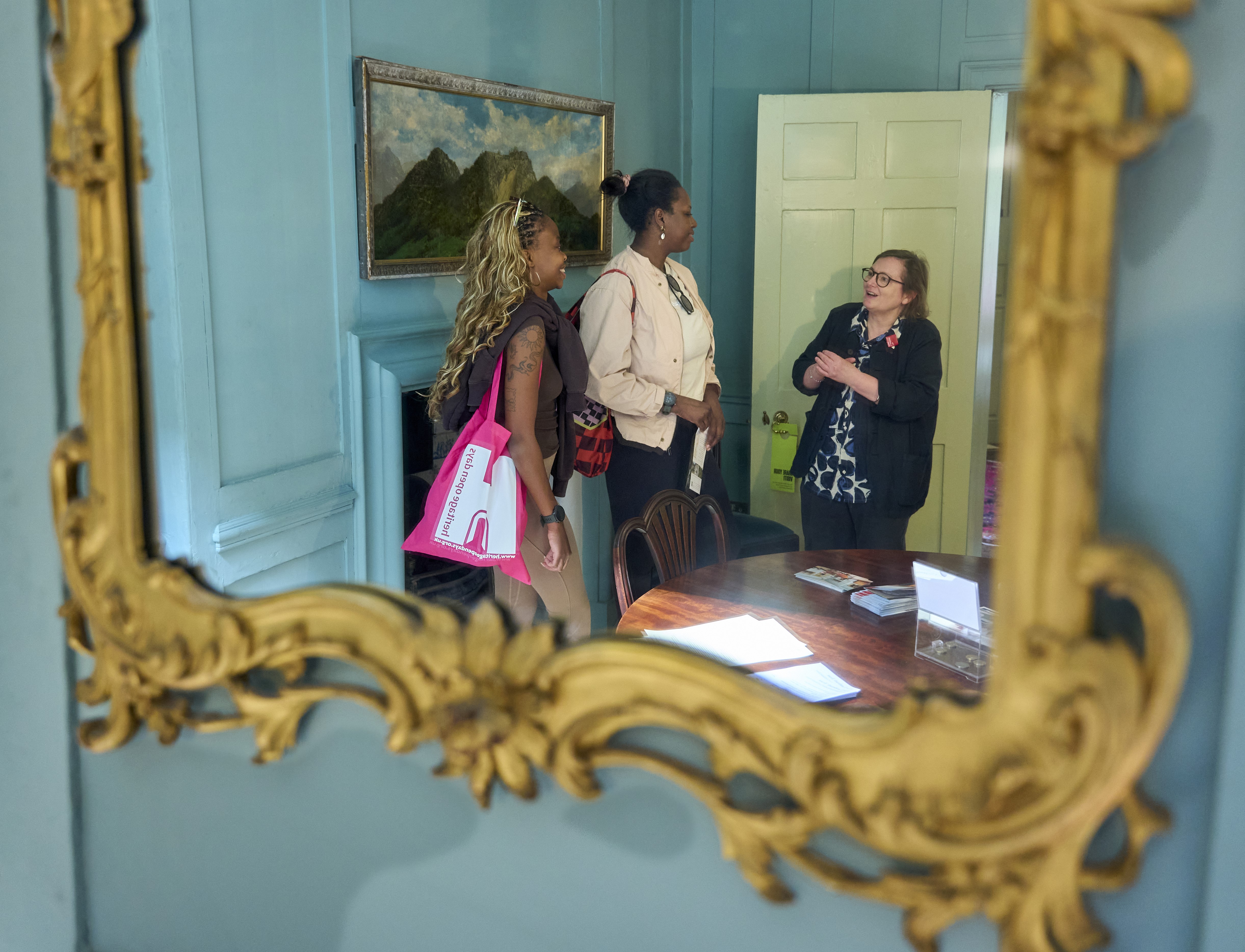
Friendly stewards and information sheets help visitors discover more about properties like the beautifully restored 18th century London town house on Princelet Street.
Natalie’s Top Tips
Take all the help on offer! The HODs team are so encouraging and supportive of all venues, and there are a lot of free resources, webinars and toolkits to help your event planning and delivery.
Don’t stress too much about booking systems, as a free event it’s a much nicer experience for visitors not to worry about a time slot.
Expect that as a free event, up to half of your pre-booked visitors may not attend on the day. It’s not personal, it’s just how it is.
Images from: The Landmark Trust / HODs 2025 - Arnhel de Serra