Castle Vault and Castle Hall
Western Esplanade, Southampton, Hampshire, SO14 2BL
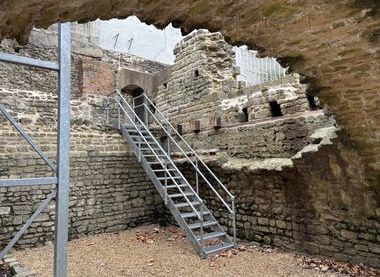
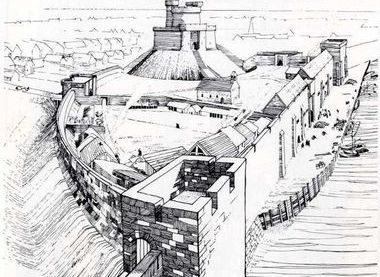
Castle Hall is the largest building in Southampton Castle to have survived. It was built sometime between 1100 and 1150 as a ‘first floor hall house’. The building was heavily altered in the 13th century. The first-floor timber was removed and a stone vault constructed in its place. Two large doorways in the west wall of the vault allowed wine to be brought in the Castle Quay. The doorways were blocked after the 1338 French raid and converted to gun emplacements.
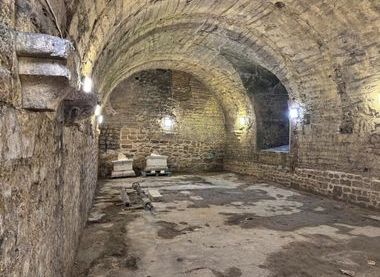
Castle Vault was built in the late 12th century to the north of Castle Hall. It is the only part of the castle buildings to have survived intact up to the present day. Originally there was also an upper storey and roof. The vault was built with eight ribs supported on sixteen decorated corbels. The ribs have been removed but four of the corbels are relatively intact.
The vault served as secure storage for the King’s wines. The king collected 10% of all the wine imported into England. This was known as the ‘King’s prize’. The King’s butler in Southampton curated the wine and dispatched it to the various royal castles and palaces where it was needed. During the 13th century the vault was known as ‘King’s Cellar’ or ‘King’s Vault’. The vault was then blocked up for many years until the original Norman doorway was unblocked around 1890.
During World War II it was used as an air raid shelter for up to 200 people. It had brick blast walls and a toilet added which have subsequently been removed.
Western Esplanade, Southampton, Hampshire, SO14 2BL
Castle Vault has level access from the pedestrianised area south of West Quay. Double doors into the vault are 1.35 metres wide at the narrowest point. The space has low level lighting and some natural light. Floor is uneven and damp and can be slippery in places. Castle Hall is outdoors and accessed via steps with handrails.
There are no facilities available at this site.