Quaker Meeting House
Colchester Quaker Meeting House, 6 Church Street, Colchester, Essex, CO1 1NF
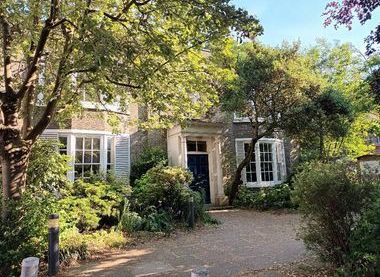
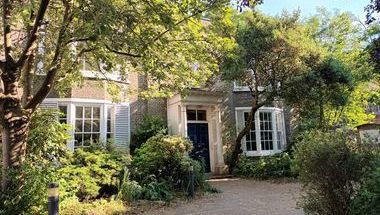
This brick building dates to 1802-3 and was originally known as St Mary's House. It was the home of William Mason (1768-1840), a solicitor and member of one of Colchester's most influential families. Between 1802 and 1813, William Mason served as Colchester's Town Clerk and later became an alderman. The Masons were related by marriage to the painter John Constable (1776-1837), who was a frequent visitor to their home when he was sketching in the local area. This building stayed in the Mason family until 1919 when it became a doctor's surgery. After several more changes of use, the house fell into serious disrepair in the 1960s until the Colchester Quakers bought it in 1971, preserving the frontage and rebuilding the inside, including adding a hexagonal meeting room.
Quakers have been active in Colchester for more than three centuries. Some eighty local Quakers were imprisoned for their faith during the religious persecution of the seventeenth century, the best known of whom was the 'boy martyr' James Parnell (c. 1636-56), who died in Colchester Castle at the age of 19. Many others were ridiculed, beaten and fined, but they continued to live and worship in the Quaker way. A self-guided trail leaflet around local sites with Quaker connections is available.
Colchester Quaker Meeting House, 6 Church Street, Colchester, Essex, CO1 1NF
Shallow steps into building.
2026 marks the 250th anniversary of the birth of John Constable. Other buildings open nearby for Heritage Open Days on the same day are Colchester Castle, Charles Gray's Summerhouse, the Roman Theatre, St James the Great Church, 7 Queen Street (The Brewhouse), St Peter's Church, Peake's House and St Botolph's Church.