Rocks by Rail - The Living Ironstone Museum
Cottesmore Iron Ore Mines Sidings, Ashwell Road, Cottesmore, Oakham, Rutland, LE157FF
Quarrying and quarry railways was a significant part of the industrial heritage of the smallest County in the UK. Ironstone mining first started in 1882 outside the nearby village and following further quarry developments the last and largest ironstone quarry was opened up at Exton Park in Rutland in the early 1950s. Ironstone mining finally came to a close in 1973 when decisions were made to import ironstone to the UK on economic grounds. Local ironstone mining was to continue to serve the steelworks at Corby and in 1974 the giant dragline excavator was walked some 13 miles from Rutland to Corby to continue to work in a quarry near Harringworth. Corby steelworks were closed in 1980 when its last ironstone quarries also closed bringing ironstone extraction to an end in the UK.
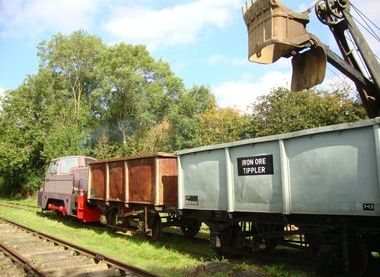
As the quarries closed down a group of enthusiasts came together to seek to preserve and conserve part of the ironstone heritage of the region . In 1980, a small museum was established near Cottesmore in Rutland, which seeks to show something of the scale of a once important local industry. Over the years the museum's volunteers have worked hard to bring together a comprehensive collection of quarry railway equipment and quarrying archives. The museums exhibition building houses a collection of steam and diesel locomotives whilst a rail connected mock ironstone quarry has been built to allow demonstrations of vintage quarrying equipment equipment. The museum has a large car park and operates a cafe.
Cottesmore Iron Ore Mines Sidings, Ashwell Road, Cottesmore, Oakham, Rutland, LE157FF
Assistance available to access platform ramp