St Lawrence Church, St Lawrence, Isle of Wight
St Lawrence Church, Undercliff Drive, St Lawrence, Ventnor, Isle of Wight, PO38 1XJ
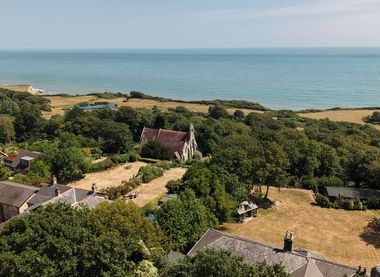
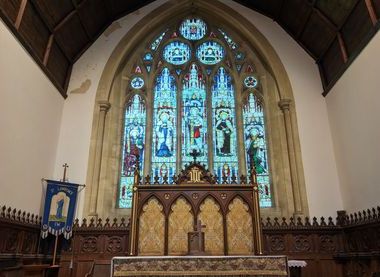
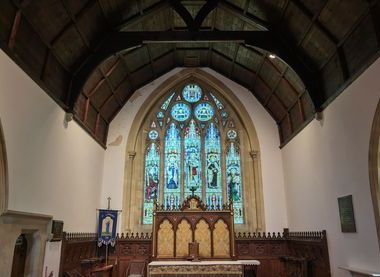
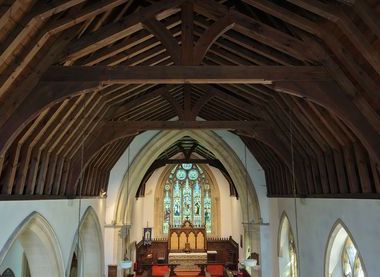
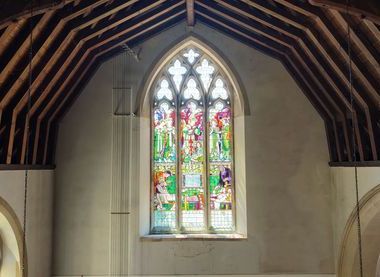
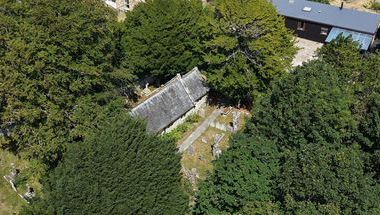
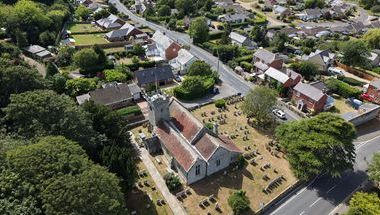
St Lawrence’s Church, St Lawrence, is a Victorian parish church of outstanding architectural and artistic interest, built in 1876–1878 to designs by Sir George Gilbert Scott — one of the foremost architects of the Gothic Revival and the designer of the Albert Memorial and St Pancras Station in London. The church consists of a nave, chancel, north aisle, south porch and a western bellcote housing eight bells cast in 1935. Its interior has remained almost unaltered since it was built and is particularly celebrated for its exceptional collection of Pre-Raphaelite stained glass by Edward Burne-Jones, William Morris and Ford Madox Brown, much of which was transferred from the chapel of the Royal National Hospital for Diseases of the Chest in Ventnor when that institution closed in 1969. The west window, by William Reynolds-Stephens, was exhibited at the Victoria and Albert Museum in 1971. The font predates the church and is believed to be of medieval or Saxon origin, brought from the neighbouring Old Church and recut by Scott. The parish is also home to the Old Church of St Lawrence on Seven Sisters Road, a two-cell Norman church of late 12th-century origins, which for many years held the distinction of being the smallest parish church in England.
St Lawrence Church, Undercliff Drive, St Lawrence, Ventnor, Isle of Wight, PO38 1XJ
Limited parking is available on nearby lanes, steps to the entrance.
St Lawrence’s Church is part of the South Wight Group of Churches in the Diocese of Portsmouth. The parish is home to two historic churches: the Victorian parish church on Undercliff Drive and the Old Church on Seven Sisters Road, one of the smallest medieval churches in England. The present church, built in 1876–1878 to designs by Sir George Gilbert Scott, retains a largely unaltered Victorian interior, including its timber seating, roof structure and fittings, which contribute to the strong Gothic Revival character of the building.