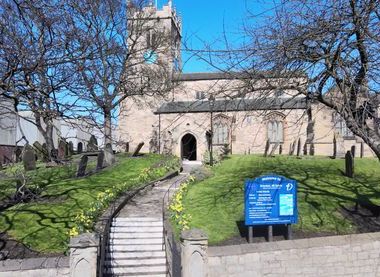
An invitation to visit the ancient church of All Saints, Stranton. Guided tours throughout the day.
Church Row, Hartlepool, County Durham, TS247QT
No-one knows for sure how old Stranton Church is. The central part of the present building dates back to the twelfth century. It is highly likely that there was a previous building on the site, an archaeological survey concluded that large stones in the wall of the nave are Saxon in origin. The church stands on this ancient site on a hill easily seen by anyone traveling north into Hartlepool.
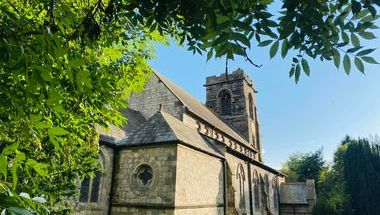
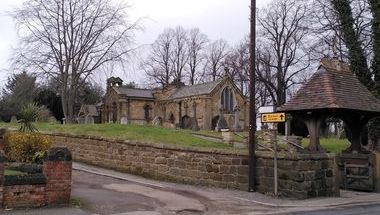
Like many English churches Stranton is a mixture of styles and stonework. Apart from the Saxon stonework in the nave, the oldest part of the building is the twelfth-century semi-circular arch in the east wall behind the Communion table. About 1280, a north aisle was added; the tower arch and a north arcade were built. Then in the fourteenth century, the chancel was reconstructed, the south aisle added, the tower remodelled and the upper part built. In the fifteenth century, a chapel, now called the Fulthorpe Chapel, was added to the north side of the chancel. The whole north wall of the chancel was taken down and two arches inserted. At the same time a new chancel arch was added and the clerestory and the porch were built. The next transformation took place in the eighteenth century. A gallery was put above the north aisle and the nave was completely altered on that side. The north clerestory was removed, the aisle wall raised and a new roof of a flatter pitch put over the nave on the north side. The organ chamber was also built to house the fine Abbott and Smith organ.
Church Row, Hartlepool, County Durham, TS247QT