
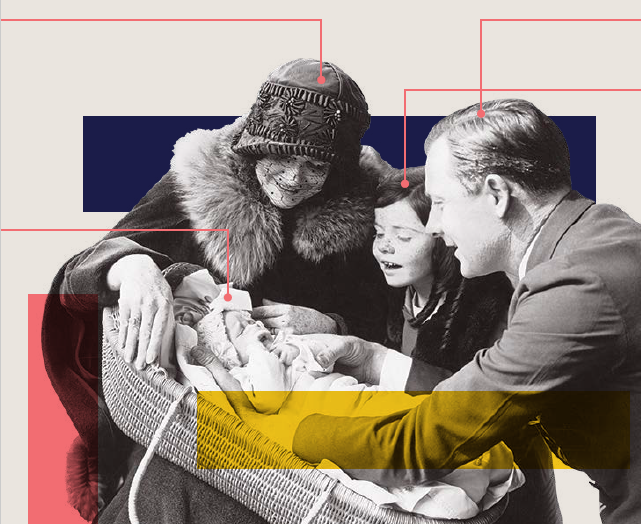
As part of its partnership with Heritage Open Days, family history website Findmypast has been delving into the untold stories surrounding two remarkable places: Norwich Cathedral and Manchester’s People’s History Museum. From the medieval streets of Norwich to the industrial heart of Manchester, these places have witnessed centuries of ordinary life. People passed through their doors, opened businesses on their streets, raised families nearby and went about their working days – leaving traces of their lives in the records that survive into the present day.
The families living near Norwich Cathedral
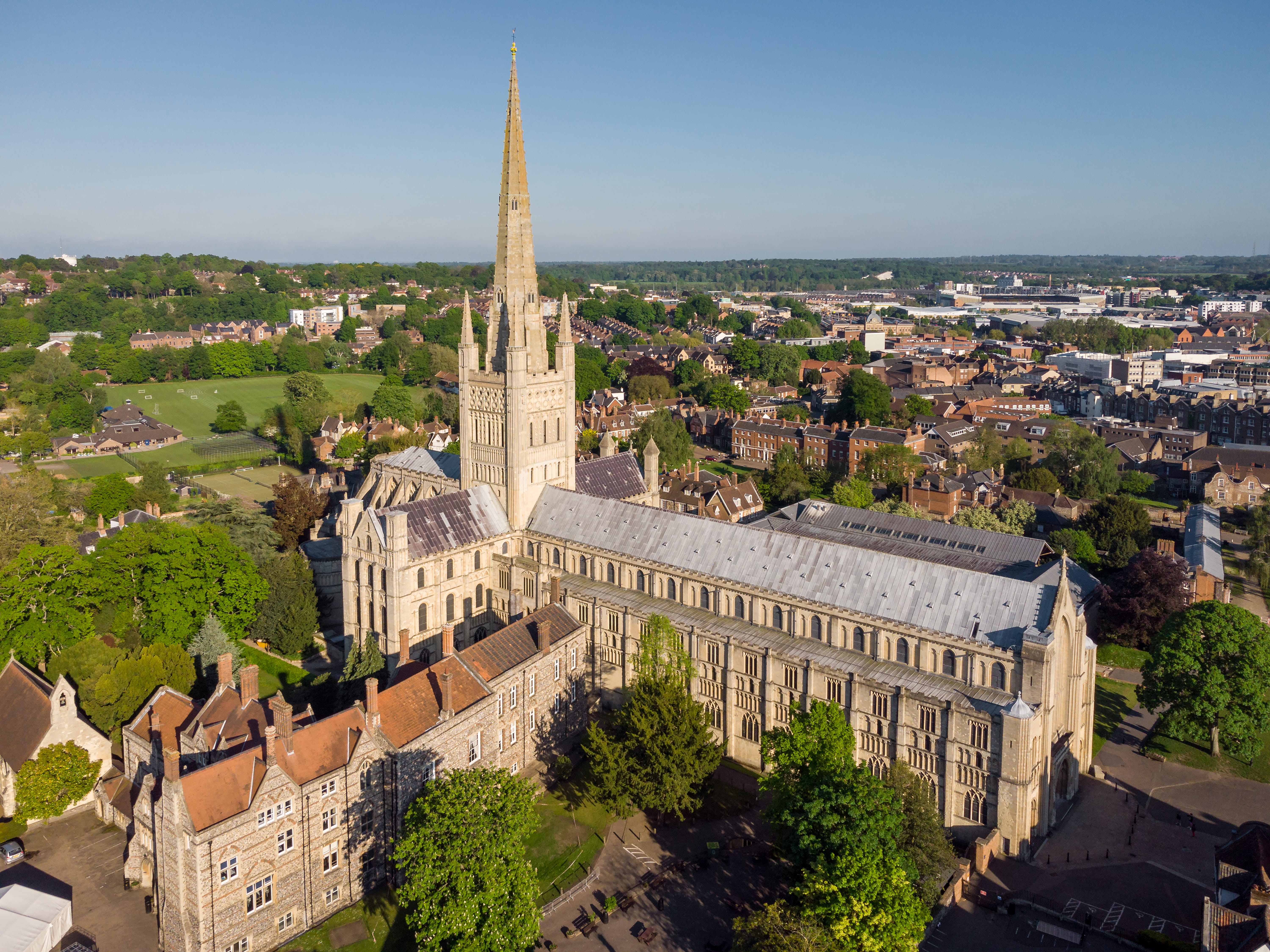
Stand on Norwich’s Palace Street today and the Cathedral is impossible to miss. Its towers rise above the surrounding streets, but for the families who lived here in the Edwardian era, it was part of the backdrop to everyday life. If we look at the records that remain today, those everyday scenes begin to take shape.
The landlady with a life full of surprises
On Wensum Street stood the Black Horse, a busy public house where local life played out alongside the Cathedral. Behind its doors, Lydia Curson was not only running a business but managing a complicated household of her own.
The 1921 Census offers us a lively snapshot. 53-year-old Lydia is recorded as a married woman and publican, living with her 82-year-old mother, her 77-year-old mother-in-law, a widowed niece and three young relatives.
Records reveal her tumultuous life story. Her husband Wallace Evans, a chief Naval engineer, died at sea in 1906. She remarried in 1911 and was living at the Black Horse pub on Wensum Street in the 1911 Census. Her second husband was a hairdresser, while Lydia was the licensed landlord. A criminal drama unfolded there in 1912 - a newspaper report reveals how jewellery (including a gold chain and a brooch) had disappeared from the Cursons' home, along with other personal possessions. So Lydia found herself giving evidence at Norwich Guildhall. The investigation led police to a network of local people, including two 15-year-old boys and a hawker living at a Quay Side lodging house.
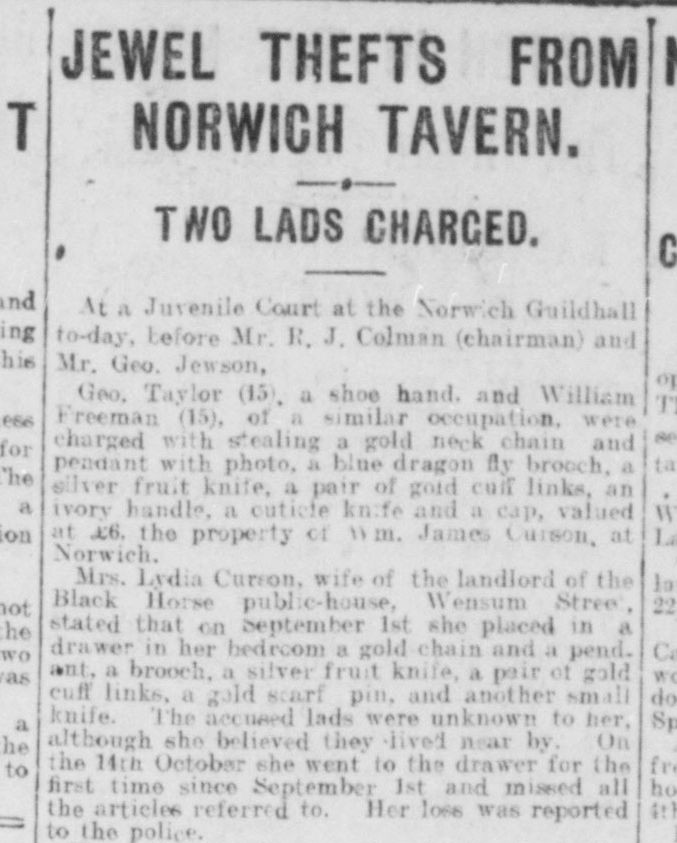
Digitised newspapers show us not only where people, like Lydia, lived and what they did for a living, but the everyday dramas taking place on the streets.
The Morgans: from Tombland to the battlefields
Just a short walk away, Tombland was home to another very different household. At 23 Tombland lived the Morgans - a professional family whose story spans from Norwich to Edinburgh, from the medical profession to the battlefields of the First World War.
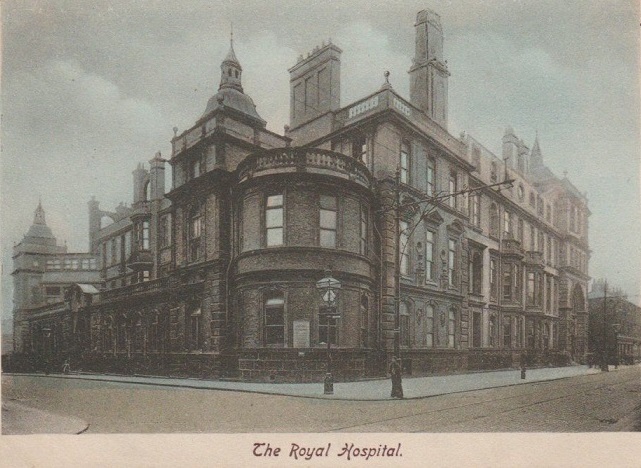
The 1921 Census places Dr Benjamin Branford Morgan at 23 Tombland with his wife, Ethel, a housemaid and a cook. Benjamin’s career can be traced through the decades. The 1911 Census records him as an ophthalmic house surgeon at the Royal Hospital in Sheffield; in 1913, a University of Edinburgh graduation report shows he received his medical degree; the Medical Register confirms his professional status. But his story, like so many others, was shaped by events far beyond Norwich.
Benjamin went on to serve with the 2nd East Anglian Field Ambulance during the First World War. His brother, William Vanstone Morgan, served with the Norfolk Regiment, going to Gallipoli in 1915 before being killed in action in 1917. His story survives in newspapers reporting his death and his earlier career in Norwich and Diss.
Together, these records turn 23 Tombland from an address on a page into a family home, a professional household and, eventually, the story of a family affected by war.
The Watts Family - tracking a baker's life
In the early 20th century, behind one of Palace Street’s shopfronts, Arthur Allen Watts was building a life just steps from the grand Cathedral. The 1911 Census records 38-year-old Arthur as a baker, living with his wife Mary Ann, his mother Caroline and their young children. Mary Ann was recorded as ‘assisting in the business’, and there had recently been an addition to the home: their youngest daughter was just four days old when the census was taken on 2 April 1911.
The census records give us snapshots of family life, and through them we can track Arthur’s career from apprentice to baker to shopkeeper. Adding in newspaper records provides extra colour and the seemingly mundane story of a family business becomes something more: a glimpse into the realities of running a shop, the regulations of Edwardian Norwich and the unexpected events that could unfold on an ordinary street.
Watch this special webinar to see how Findmypast pieced the story together and get top tips for your own research.
The ordinary weaver at the Peterloo Massacre
In Manchester, the experiences of William Cheatham offer a powerful example of how we can look at an extraordinary event through the eyes of ordinary people.
In the summer of 1819, William Cheatham was a weaver living in Little Bolton. Like thousands of others across the region, his fate was tied to Manchester's rapidly changing industrial world. On 16 August, he set out for St Peter's Field, joining a vast crowd gathered to call for political reform. Threatened by this display of working-class solidarity, cavalry descended on the unarmed crowd, killing 18 people and injuring hundreds. Though authorities would later deny what happened to him, William Cheatham was badly injured by a yeoman’s sabre.
Later legal records provide much more detail about Cheatham's experience at Peterloo. In testimony, he fought for recognition of the injuries he’d suffered. His attempt to seek justice generated an extraordinary paper trail.
As reported in the Leicester Chronicle, Cheatham alleged that Edward Meagher threatened him before striking him with a sabre, cutting his neck and slicing through the rim of his hat. He was mocked and dismissed by Lord Stanley and the Grand Jury.
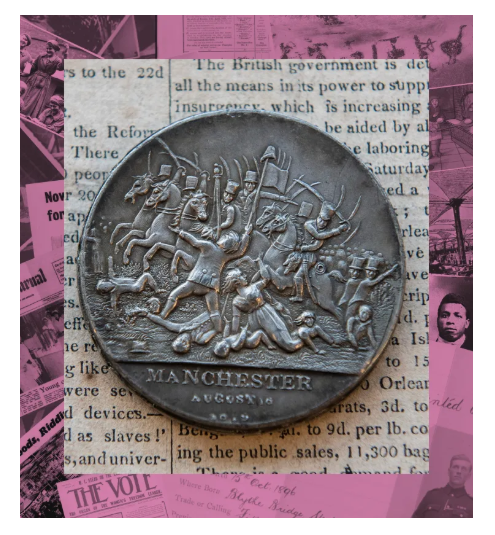
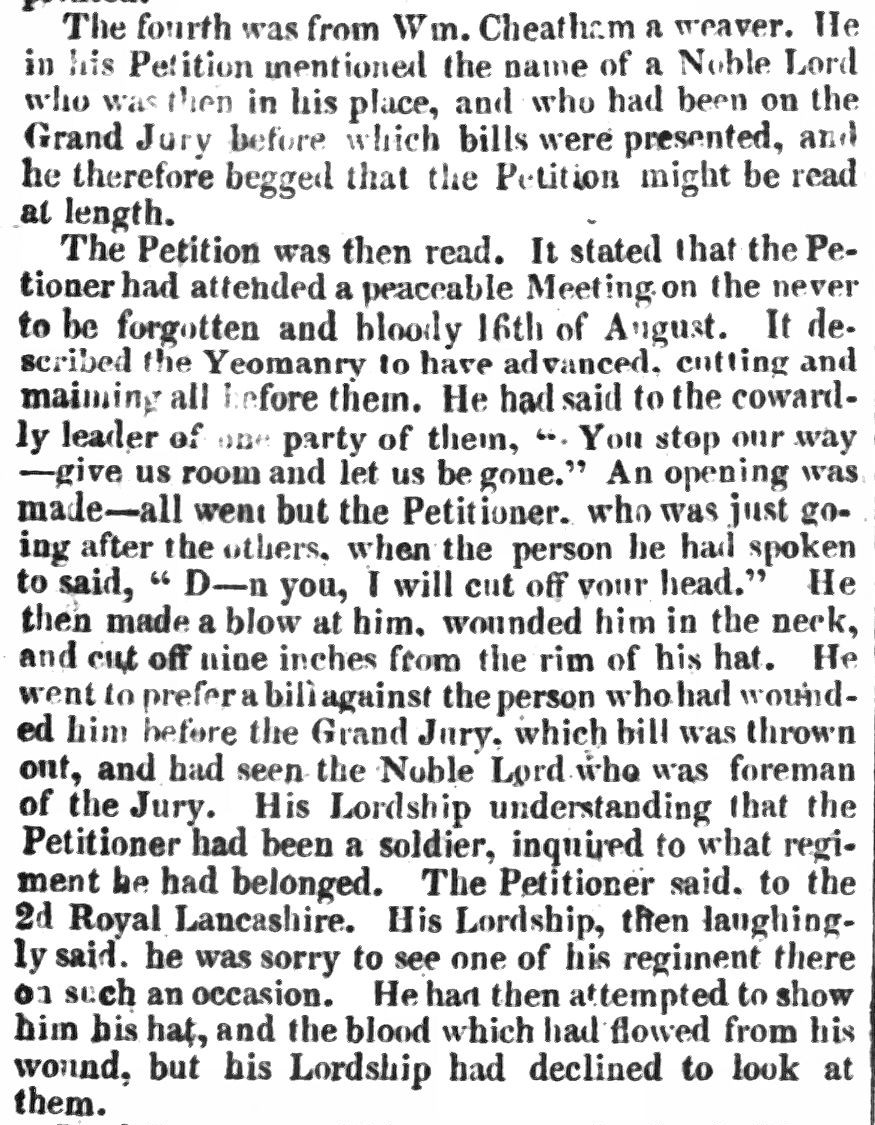
When his attempt to bring criminal proceedings failed, Cheatham took his case to Parliament. On 15 May 1821, his petition was presented to the House of Commons by Sir Robert Wilson. The resulting parliamentary debate provides an unusually personal glimpse into the aftermath of Peterloo, including a discussion of Cheatham's previous service in the militia and his treatment by the legal system.
The story continued into the courts. In 1822, Cheatham appeared as a witness in a civil action against members of the Yeomanry. The court ultimately found in favour of the defendants, leaving Cheatham without compensation for his injuries.
Thanks to the paper trail left behind by his legal battle, William’s story now survives as an individual spotlight to illuminate the wider narrative of Peterloo.
Uncover your ‘Everyday Histories’
William Cheatham’s story, and those of the families who lived around Norwich Cathedral, remind us that history isn’t only found in grand buildings, famous names or major events. It’s also in the baker serving his neighbours, the landlady running a pub, the family living above a shop and the ordinary working man whose life was shaped by war.
England’s history is woven through the places we call home. Wherever we look, there are stories worth telling - and people working to make sure they aren’t forgotten. Findmypast brings millions of historical records together in one place, making it possible to explore those stories for yourself. Search censuses, newspapers, parish records and more to discover where your ancestors lived and the events that shaped their lives. You never know what you might uncover.
Find out more
- Discover your family story with Findmypast
- Hear more about William’s story (and others!) on Findmypast’s A Family History Of... podcast. Joined by historian and broadcaster David Olusoga, host and genealogist Jen Baldwin explores who William Cheatham was, and how his life was changed forever by the Massacre.
- Theme hub: Everyday Histories - take inspiration from our theme hub page, with other blog posts and research prompts.
- Explore Norwich Cathedral
- Explore the People's History Museum