Blackpool is one of Britain’s most famous seaside resorts. The town was known as ‘the home of variety’ and has long had a tradition of using any space possible as a stage – from beaches and hotels to cafés and theatres! Read on to learn more about three hidden historical stories of gender diversity from shows, magic and the seaside.
The variety act - Vesta Tilley
Drag has been a feature of stage performances for hundreds of years. Pantomime dames were incredibly popular but male impersonators were much more uncommon. This is why it’s so impressive that Vesta Tilley was one of the most popular variety acts of the early twentieth century.
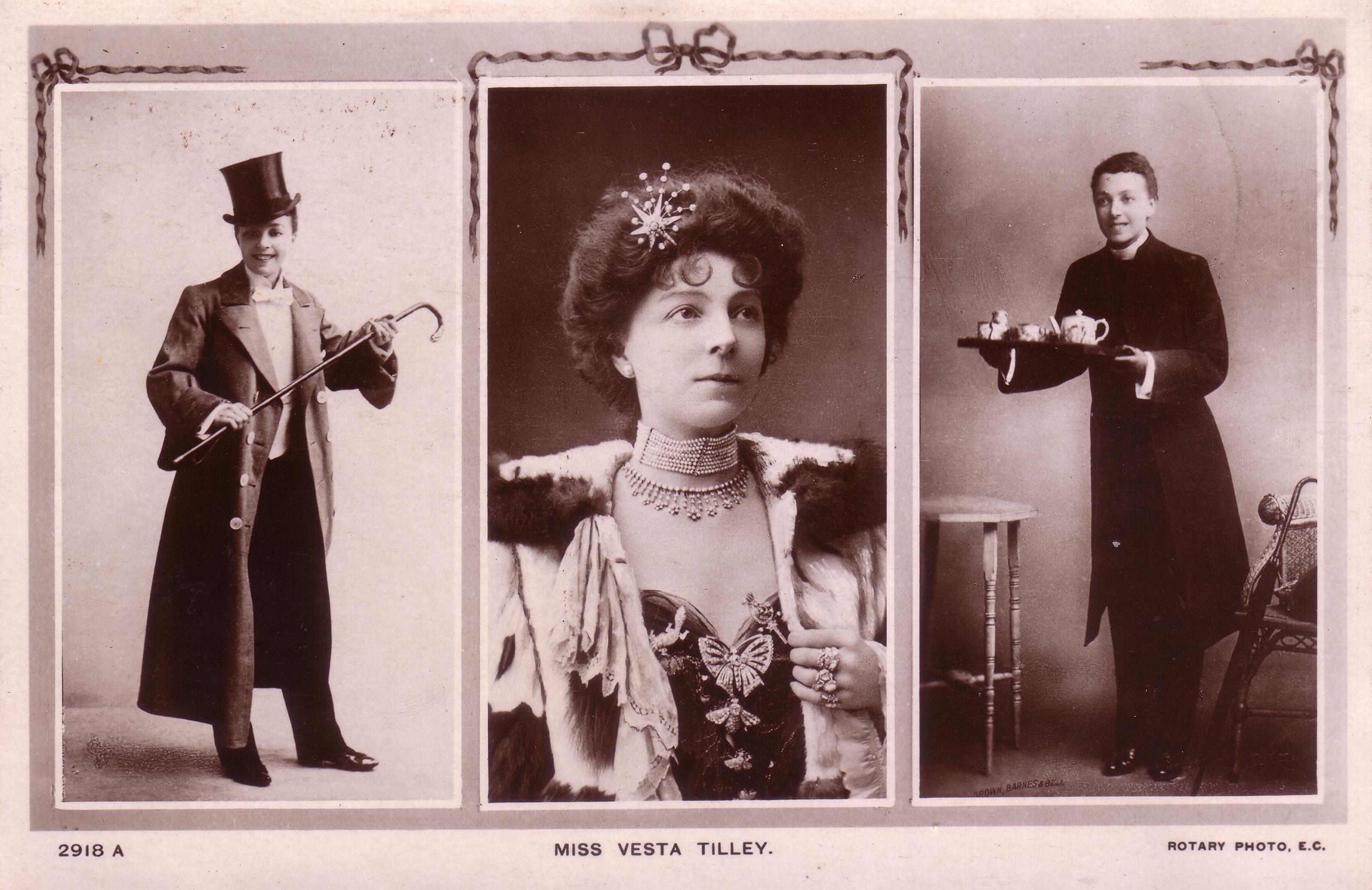
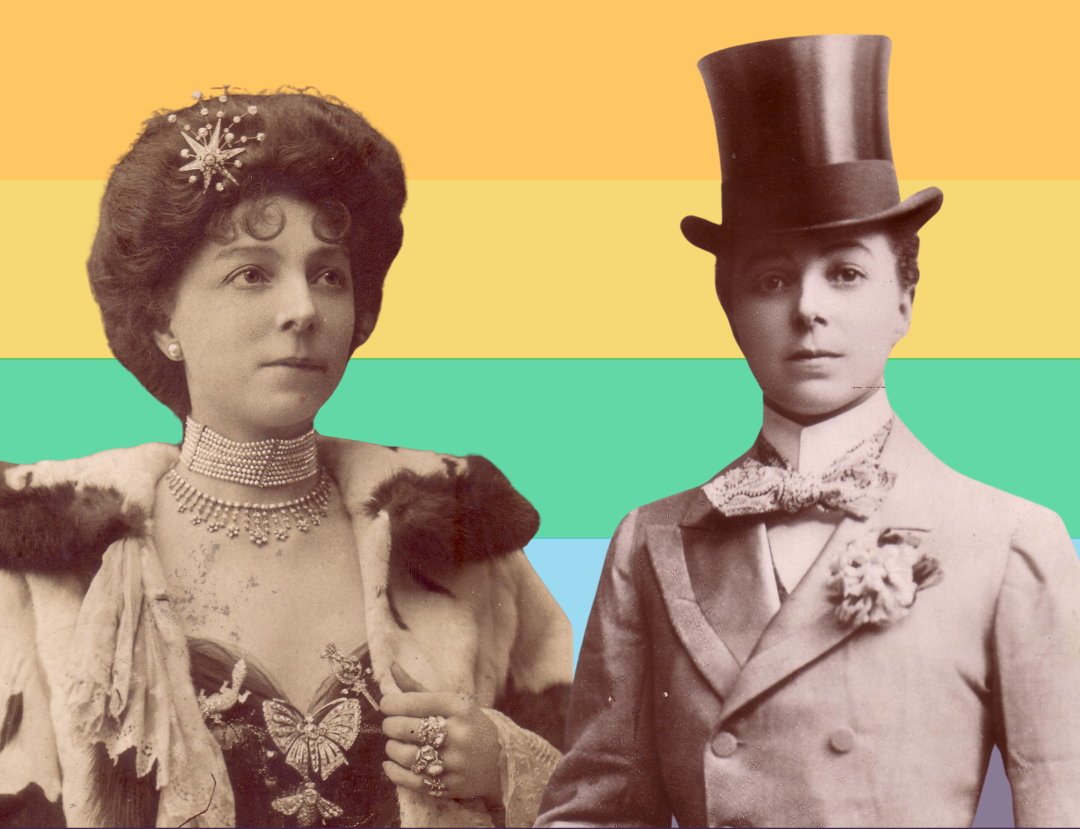
This postcard shows Vesta Tilley in her own clothes and in two of her character costumes. (Image courtesy of Blackpool Council)
Matilda Powles began performing at the age of five, adding cross-dressing to her singing and dancing act when she was only eight as ‘the Great Little Tilley’. During her first London season two years later in 1874, audiences were openly uncomfortable because it wasn’t clear whether the performer was a boy or a girl. So the act became the more feminine ‘Vesta Tilley’, named after the popular Vesta matches. Surprisingly for the time, many of her audiences were women who enjoyed the way her act cleverly imitated and critiqued masculinity. Vesta performed in Blackpool many times and with the strength of her characters she became the highest earning woman in Britain in the 1890s.
Vesta was part of the programme for the first Royal Variety performance in 1912. The performance was a huge success for variety and for the performers – perhaps with the exception of Vesta. Queen Mary reportedly hid her face in her programme rather than watch a woman’s legs, because Vesta performed in trousers which was entirely unacceptable.
In 1919 Vesta’s husband Walter de Frece decided to run for parliament and she had to quit the stage. Her farewell tour over the next year was incredibly successful – the last song in her final performance received a forty minute standing ovation! Vesta’s witty and accurate portrayals of recognisable male figures while dancing on the line between improper and acceptable entertainment was truly innovative and helped pave the way for iconic modern drag acts.
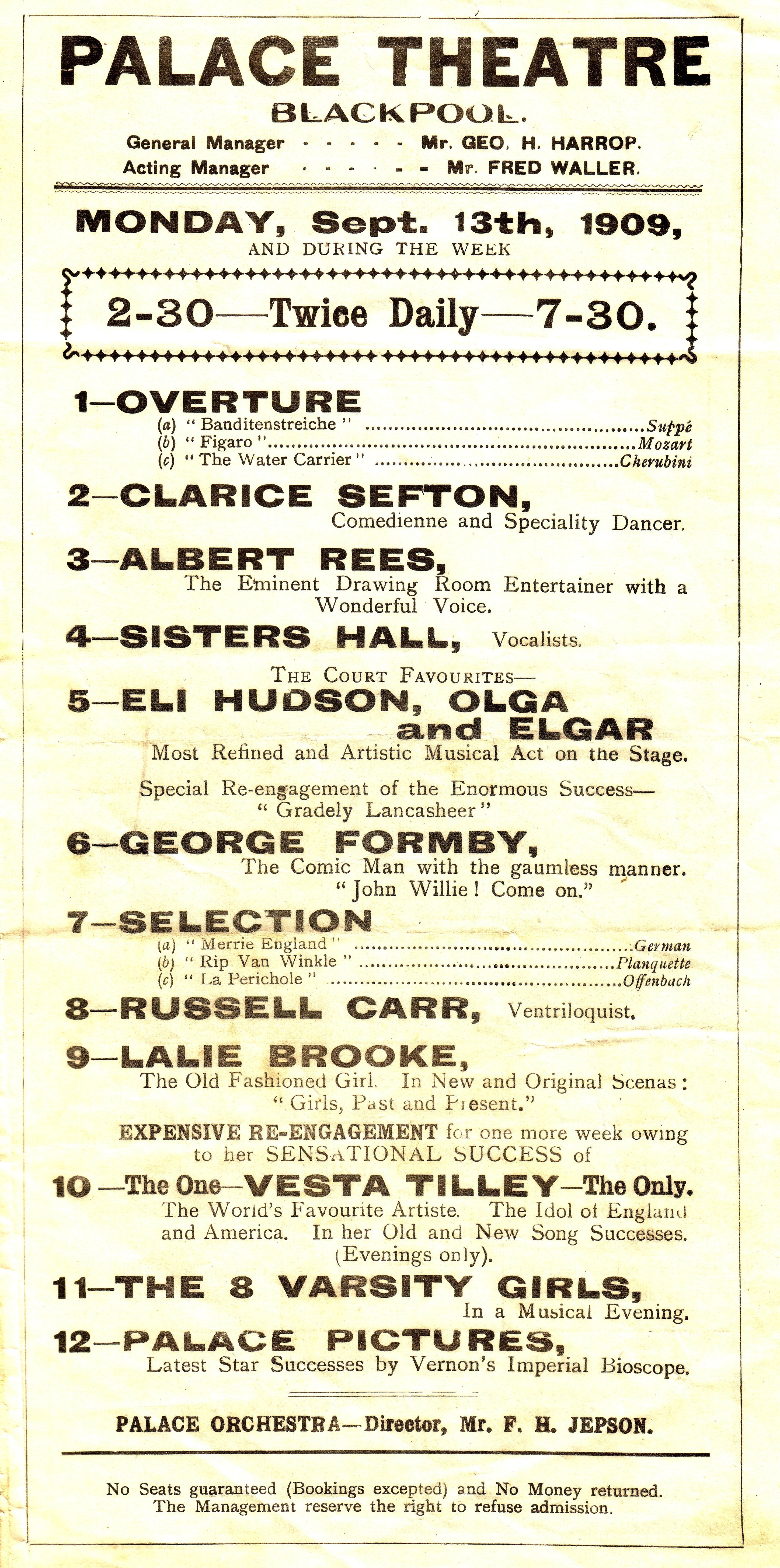
Vesta Tilley was credited as ‘The World’s Favourite Artiste’ in this 1909 programme from Blackpool’s Palace Theatre. (Image courtesy of Blackpool Council)
The sideshow act - Colonel Barker
Just as it is now, Blackpool’s Golden Mile was full of entertainment in the 1930s. A key element of this were sideshows, which exhibited people, animals or objects. Some of these were tongue-in-cheek but many exploited people who were viewed as different.
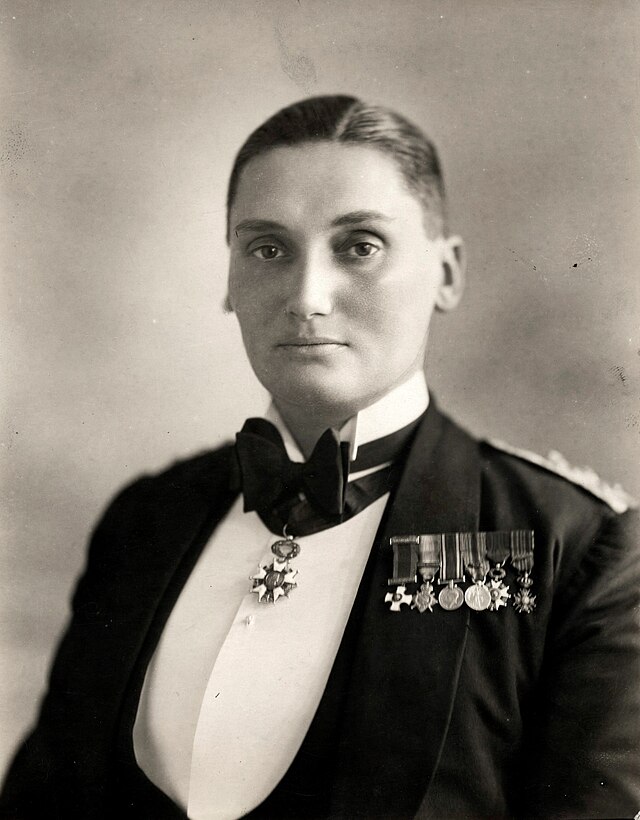
One of Blackpool’s most scandalous sideshows centred on Colonel Barker. Barker was born in 1895 and began living as a man in 1923. They gained notoriety by claiming to be a colonel from the Royal Air Force and joining the National Fascisti party. This only increased when they were arrested for failing to appear in court and officers discovered they had falsified the gender on their marriage certificate. Sentenced to nine months in a women’s prison despite continuing to present as a man, Barker remained under considerable media attention for many years due to their brushes with the law.
In 1937, Barker met showman Luke Gannon and created the sideshow ‘On a Strange Honeymoon.’ The premise was that Barker and their wife were on their honeymoon in Blackpool and had not yet consummated their marriage. If they remained separated for the duration of the display, then they would win money from Gannon. According to the press over a million people visited the couple that summer!
The majority of the attention around the sideshow focused on debating Barker’s gender and sexuality. The London press either referred to Barker as a woman pretending to be a man, or as a lesbian, both implying impropriety and scandal. However, Blackpool’s newspapers more consistently referred to a man and his wife in the sideshow. This reflected the messaging inside the sideshow itself, allowing visitors to be curious and come to their own conclusions about the people on display. Whilst speculation about Barker’s “real” gender ran wild, there was no requirement for a visitor to engage with this element to experience the sideshow. Instead, it’s important to recognise that sideshow exhibits were real people who became prominent features of public conversation and acknowledge that attitudes towards identity have changed significantly over time.
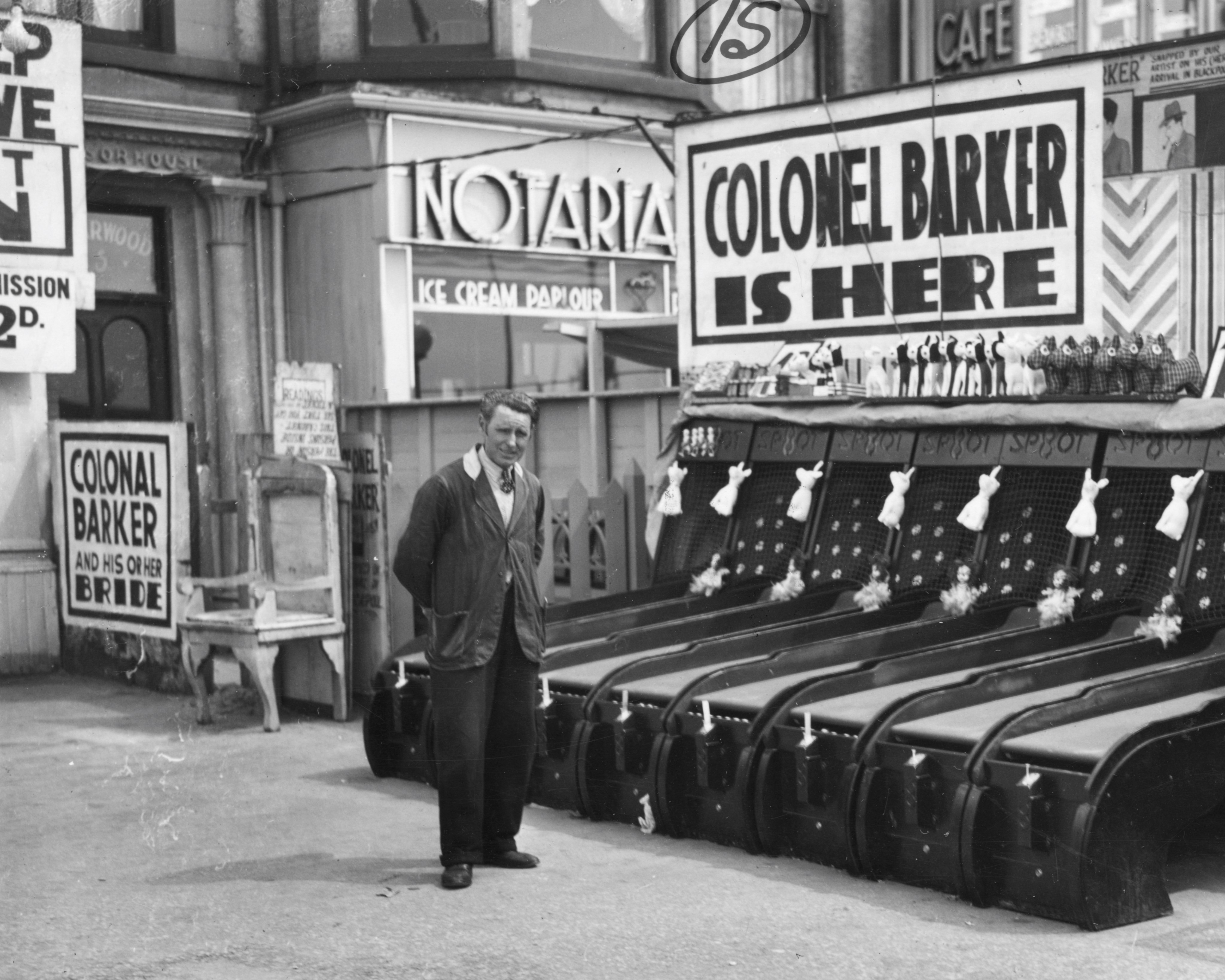
Adverts for Barker’s sideshow also leaned into questions around their gender: ‘[Colonel] Barker and his or her bride’. (Image courtesy of Blackpool Council)
The magic ventriloquist - Terri Rogers
A figure who was very open about their gender was ventriloquist and magician Terri Rogers. She began performing in the fifties and received some short-lived fame when she was one of the first people to undergo gender reassignment surgery on the NHS. Despite already having written a book on ventriloquism in 1948, her transition restricted some opportunities for her to perform and she essentially had to start again with her career. Her career picked up again in 1968 when her stage performances gave her the opportunity to travel the world alongside acts like The Krankies, and led to popularly reviewed television appearances throughout the 1970s.
Terri’s act was impressive for her uniquely comedic mix of magic and ventriloquism which blurred the lines between these arts with ease. She played into conventional femininity, often wearing evening gowns with fancy hairdos and tiaras in contrast to her bad-mouthed, matcho, working-class ventriloquist dummy Shorty Harris. Terri had a strong connection to Blackpool, performing in the 1978 Blackpool Bonanza and repeatedly appearing at the annual Blackpool Magician’s Club Convention Gala Shows through to the late 1980s. Despite the initial sceptical response to her transition, Terri built up a career through her exceptional sense of humour and technical prowess – enough to make Shorty Harris so lifelike that producers found themselves talking directly to him!
At the same time as touring her act, Rogers became an expert on topology (which is the art of creating illusions with shapes) and released three texts that are still considered the gold standard. She wrote many books, invented multiple magic tricks that sold commercially, and worked with many magicians like Paul Daniels and David Copperfield to develop illusions for their acts. Terri’s talent established her as a master of the magical and ventriloquist arts in Britain and across the world.
Find out more
- Pride Beside the Seaside Tours – upcoming dates will be featured here.
- What’s On at Showtown – explore more events and exhibitions at Showtown.
- Showtown’s research – discover more articles on Blackpool’s history.