
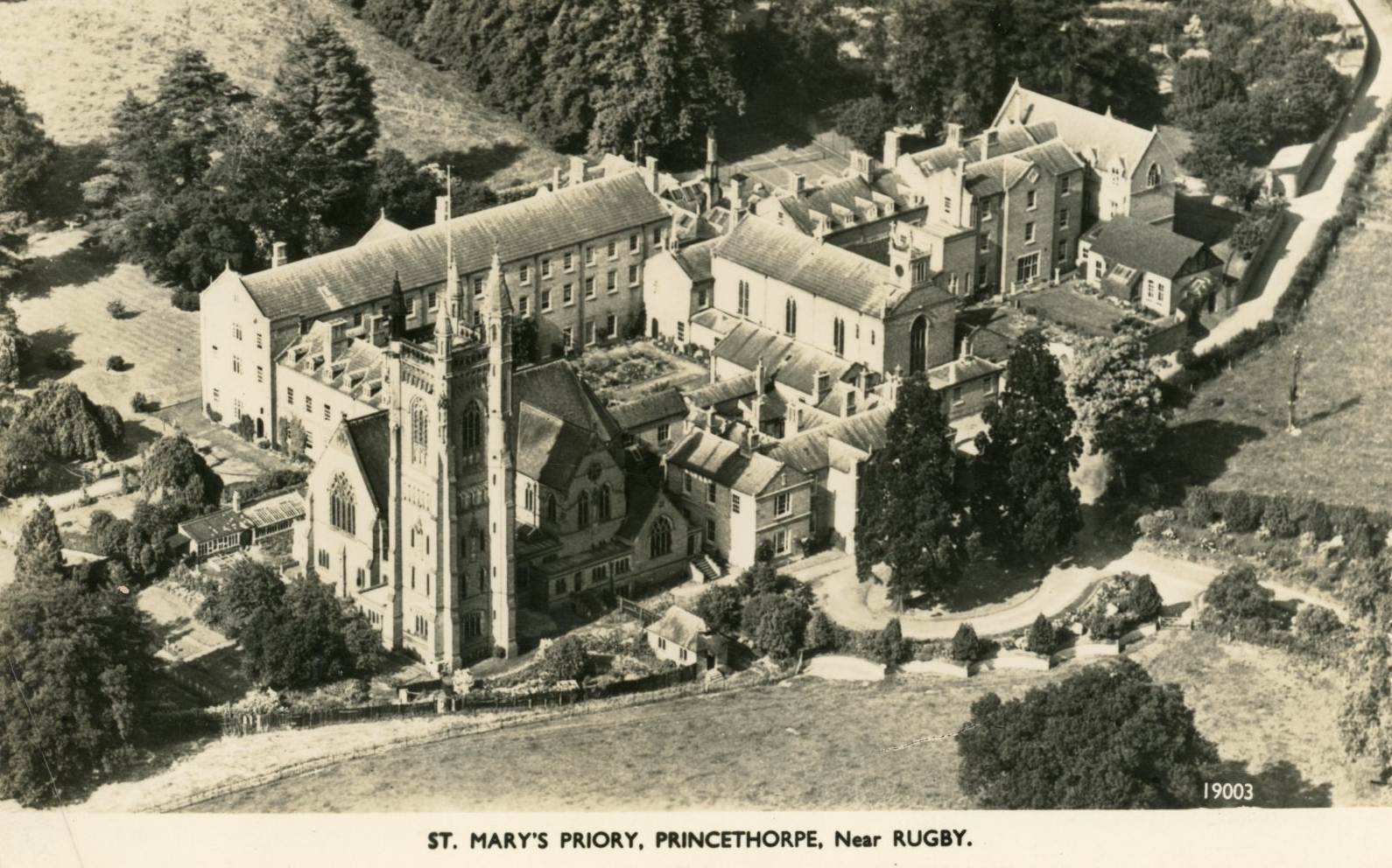
As a former priory, Princethorpe College has no shortage of inspirational women in its history. St Mary’s Priory was founded in 1835 by a community of Benedictine nuns who had been forced to flee their original home during the French Revolution. While our beautiful College buildings would not be here today without the nuns, for this year’s Heritage Open Days we are excited to share some of the lesser-known stories of its former residents. Through the theme of ‘Everyday Histories’, we will be exploring the lives of the highly-skilled and loyal servants who kept everything running smoothly within the Priory and its boarding school.
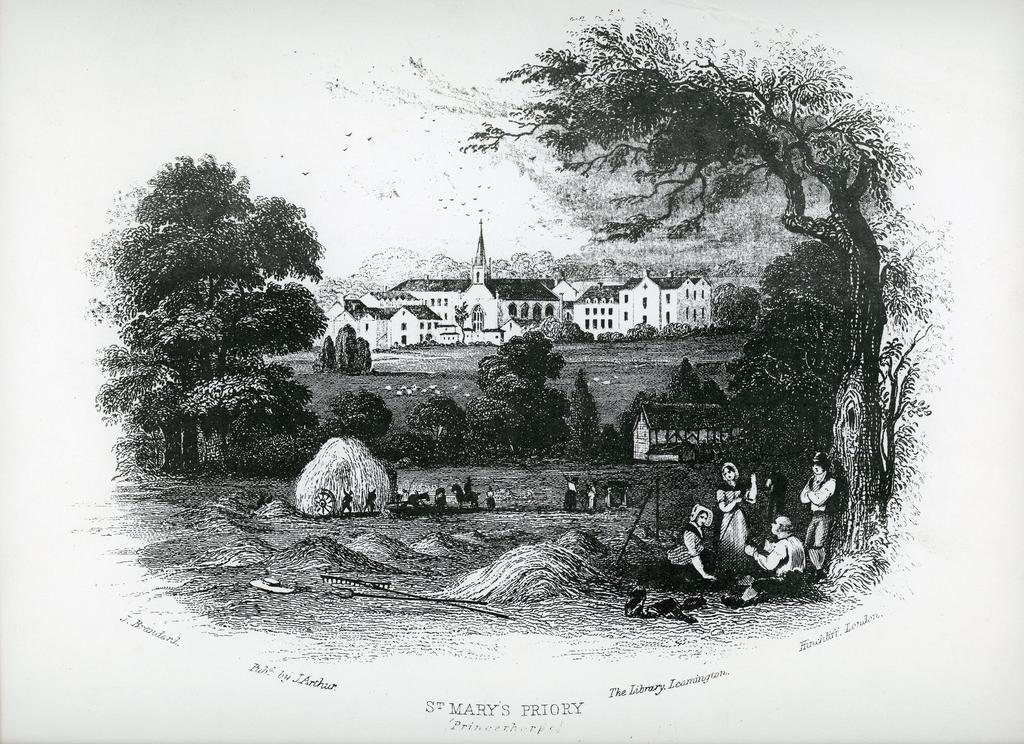
Introducing Emma
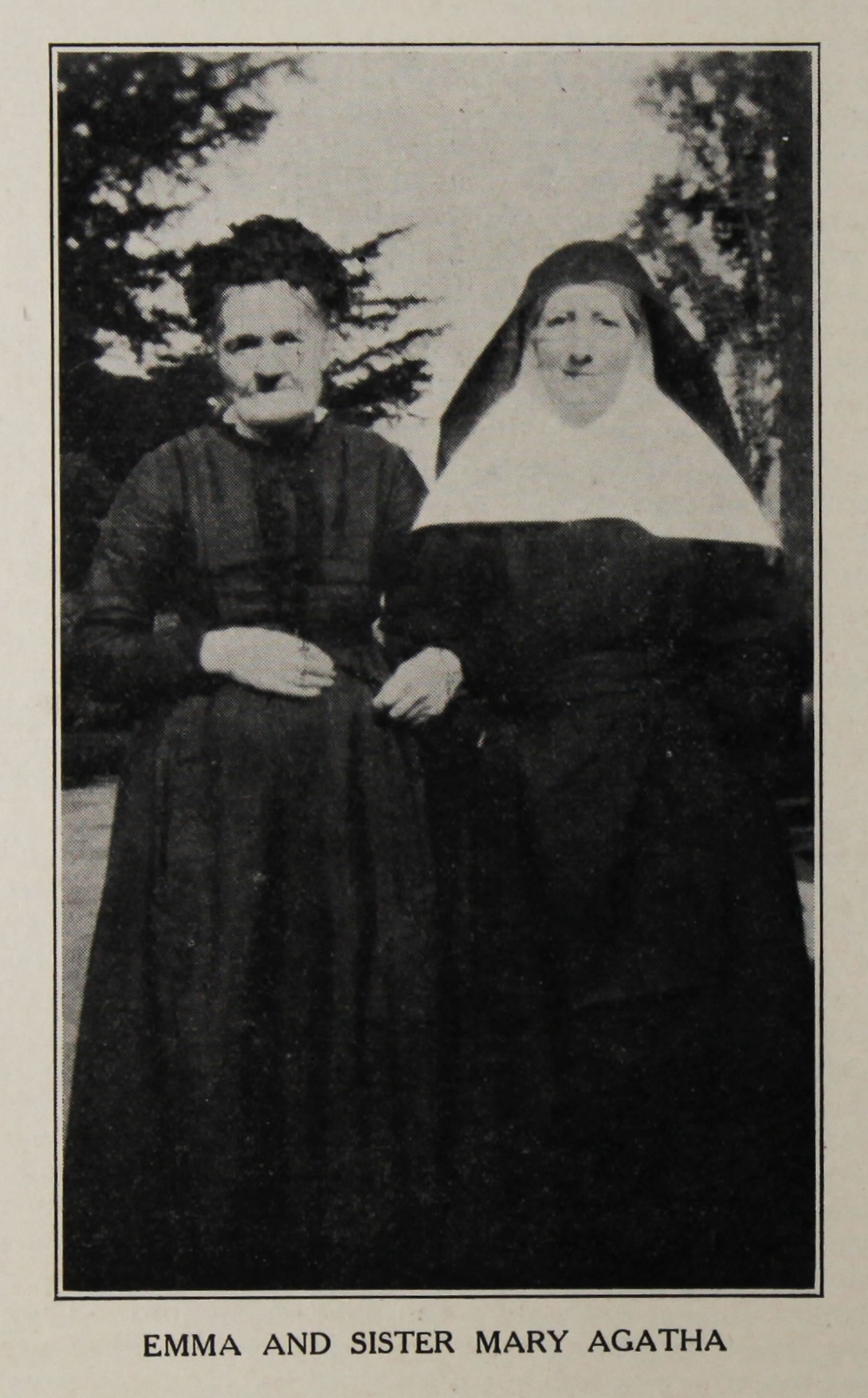
One key figure among these dedicated individuals was Emma Cooke. She came to St Mary’s Priory as a dressmaker in 1866 and served the community for an incredible 68 years, up until her death in 1934. Emma was born in Stafford on 24 August 1842; her father was a cordwainer (shoemaker) who also acted as custodian of Stafford Castle.
The 1851 Census shows Emma living in Malt Mill Lane – at that time one of the more overcrowded and impoverished parts of Stafford – with her parents Thomas and Hannah, and six siblings aged between 4 and 18. The family was brought up in the Catholic faith, and Thomas was Sacristan at St Austin’s Church for over 50 years. Hannah died later in 1851 when Emma was just 9, leaving Thomas to bring up the family alone.
Emma's work
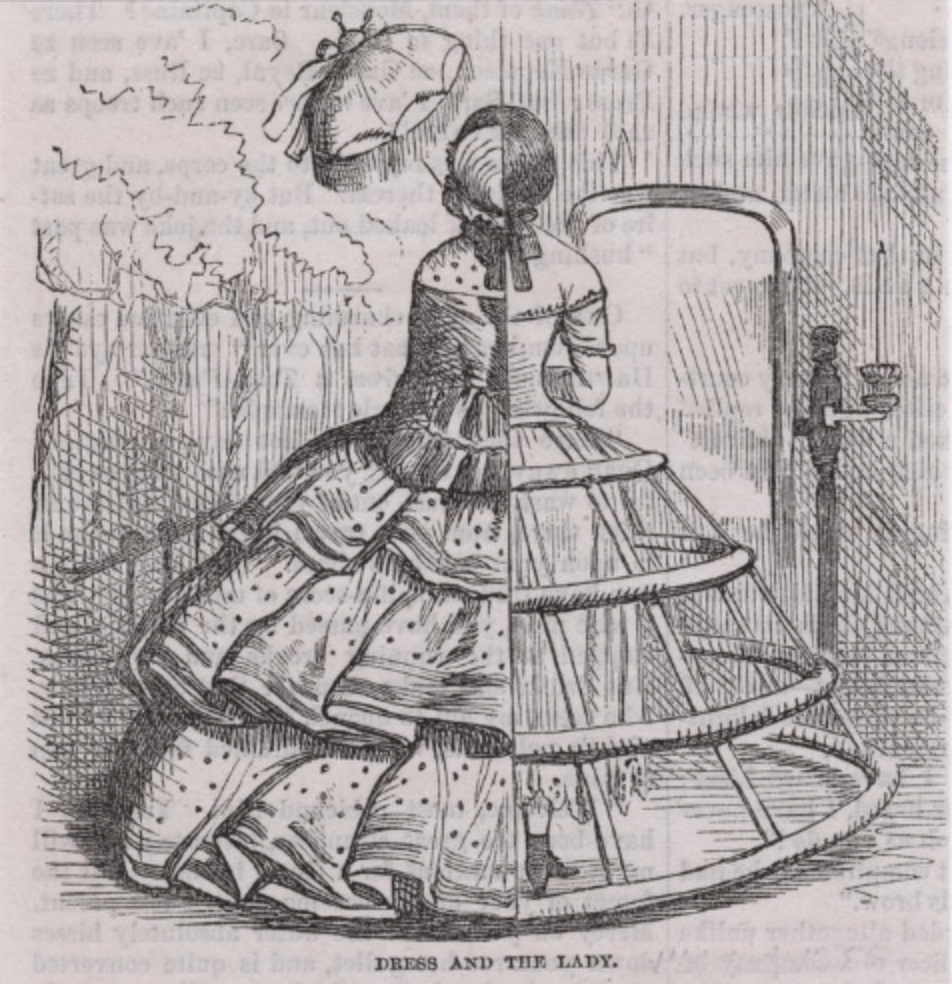
At the age of fourteen Emma was apprenticed to a local dressmaker, who worked her very hard. Crinolines were the great fashion of the time, and her mistress made Emma race her in the seemingly endless task of getting all the hems stitched - until one day Emma won, and was never challenged to another race! These experiences stood her in good stead for her future work at St Mary’s Priory, where the records show she was able ‘to cope with and accomplish single-handed the enormous amount of sewing requisite for the school’.
From the time she joined the St Mary’s Priory staff in 1866, Emma was responsible for making all the uniform for the girls in the Priory’s boarding school, as well as other necessary items for the girls and the nuns such as aprons and veils. She had a room next to one of the school dormitories where generation after generation of schoolgirls visited her over the years to have their uniform fitted, and occasionally to borrow sewing equipment. Her obituary in the 1934 school magazine recalls that ‘when these commodities were needed and were lacking, “Go to Emma” was invariably the advice given!’
Emma’s faith
As a devout Catholic, Emma joined the community and schoolgirls in all the Priory’s liturgical services and ceremonies, and in 1879 she took the next step in her faith journey by being professed as a Tertiary Sister of St Francis at the Poor Clare Convent, Baddesley Clinton. While we don’t know for certain why Emma took her vows with another order while continuing to live and work at St Mary’s Priory, the most likely explanation is that unlike the St Mary’s community, the Tertiary Sisters of St Francis were not an enclosed order. This meant that Emma could more easily continue her charitable work of making and providing clothing for the poor in the local parish.
Witnessing history
Emma’s long service at St Mary’s Priory meant that she witnessed many significant changes and events within the Priory and its school. These included:
- The introduction of English as the Priory’s main language in the 1870s (up until this point the community had still been using French as their everyday language).
- The building of a new Chapel for the Priory, consecrated in 1901 by Dr Edward Ilsley, Bishop of Birmingham and Emma’s former schoolfellow.
- The nuns’ first experience of voting in a general election in 1929, for which they were granted special permission to leave the Priory enclosure and travel to the local polling station.
Emma’s favourite treat!
In her advancing years, Emma held fast to her lifelong love of toffee! This dated back to her childhood when she and her siblings had saved up their pennies to buy butter and sugar, which they were allowed to take to Stafford Castle on Sundays to make their own toffee. According to the 1934 school magazine, ‘toffee was to her what his pipe is to the old quay-side salt’.
Emma's later years
In 1916 Emma celebrated her Golden Jubilee of coming to Princethorpe; from that time onwards she was moved to less strenuous work such as helping the nuns to make vestments and altar linen, which proved a great joy to her. Even once her eyesight began to fail she continued to make items for the poor, and her obituary reports that ‘until within a few weeks of her death [she] was ever busy with her needle’. Emma died on 19 March 1934 at the age of 91. In recognition of her long and faithful service to the community, Emma was buried in the nuns’ cemetery, close to the Chapel where she had worshipped daily.
Find out more
- History of Princethorpe College – discover more about our co-educational independent Catholic day school for ages 11-18.
- Princethorpe Foundation Archive – browse the catalogue to learn more about our collections relating to St Mary’s Priory, Princethorpe College, and our two prep schools, Crackley Hall School and The Crescent School.
- Princethorpe Foundation Archive on Bluesky – keep up to date with our latest news, including updates on our Heritage Open Days events.
- Everyday Histories - explore the inspiration hub for this year's festival theme.