
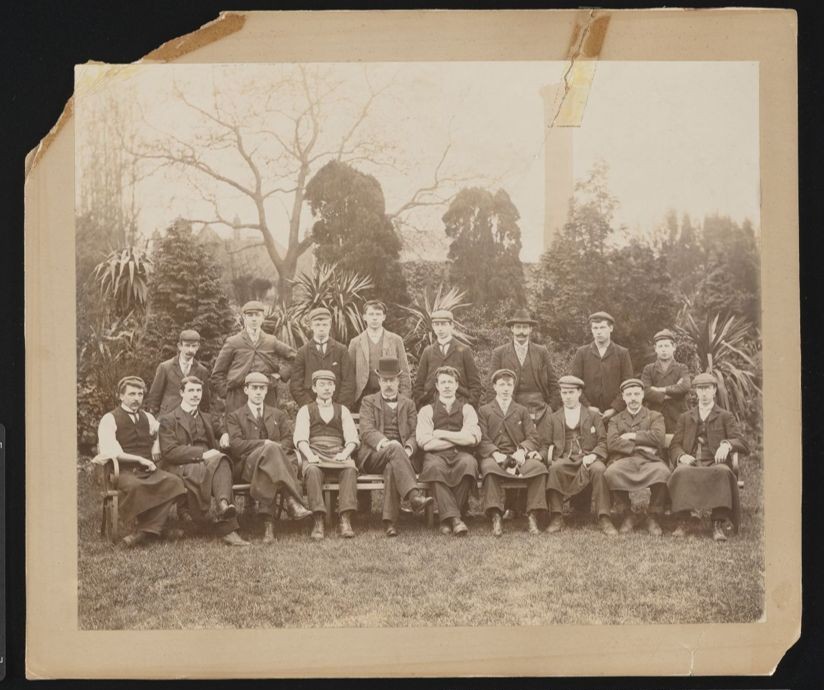
In the 19th century, gardening emerged as a profession with a clear hierarchy. Although hours were long and wages were notoriously low, it was still a respected career which many working-class men dedicated their lives to, producing a legacy of beautiful plants and gardens that we can still enjoy today. These 19th century gardeners were also prolific readers and writers, so the RHS Lindley Library has a wealth of material that gives us a clear picture of their working lives.
Bottom of the ladder
Typically, a gardener would start out as a garden boy, apprenticed for about 3 years and given instruction, food and basic lodgings in return. He would have to work on all the hard repetitive jobs that needed doing in a garden – from weeding to pot washing. Then he would work as an ‘improver’ or ‘journeyman’ going to different gardens and garden departments to build up a range of experience. It was like a series of internships, and an ambitious young gardener would try to get positions in a range of different gardens – private gardens, botanical gardens and commercial nurseries.
William McCulloch's CV
In 1826 William McCulloch, a young gardener who was employed by the Horticultural Society of London in its Chiswick garden had a CV which showed that he had travelled more than 1,000 miles during his early career. He started as an apprentice in Louth, then was a journeyman in gardens in Dublin, Edinburgh and London.
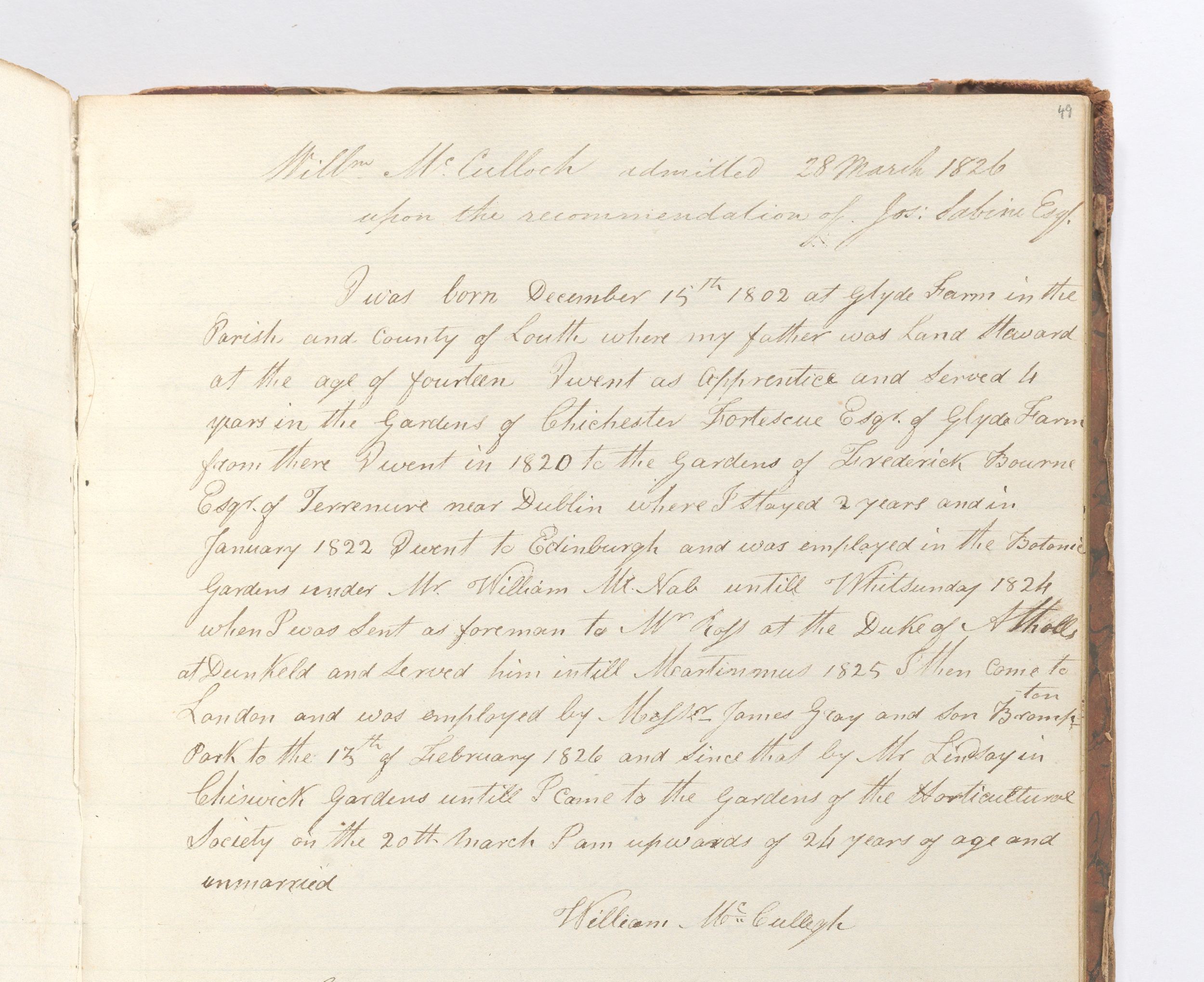
This book from the 1820s: 'Handwriting of under gardeners and labourers’ features William McCulloch’s cv. (© RHS Lindley Collections)
There were several large gardens that were respected ‘teaching’ gardens, where the head gardener was known to take a close personal interest in the development of his staff. On the other hand, there were unscrupulous head gardeners who operated a racket whereby they charged an ‘apprentice fee’, essentially a bribe either in cash up front or a weekly deduction from meagre wages in return for taking on an apprentice. Accommodation for these young single men would be basic. They lived in barrack like buildings known as bothies. This is where they lived, ate and studied.
Some wealthy employers like Leopold Rothschild provided picturesque accommodation for his gardeners at Ascott, even laying on a cricket pitch for them to enjoy in their spare time. However others were much more basic, and the gardening press regularly carried horror stories of dark, damp buildings with poor heating and straw for bedding.
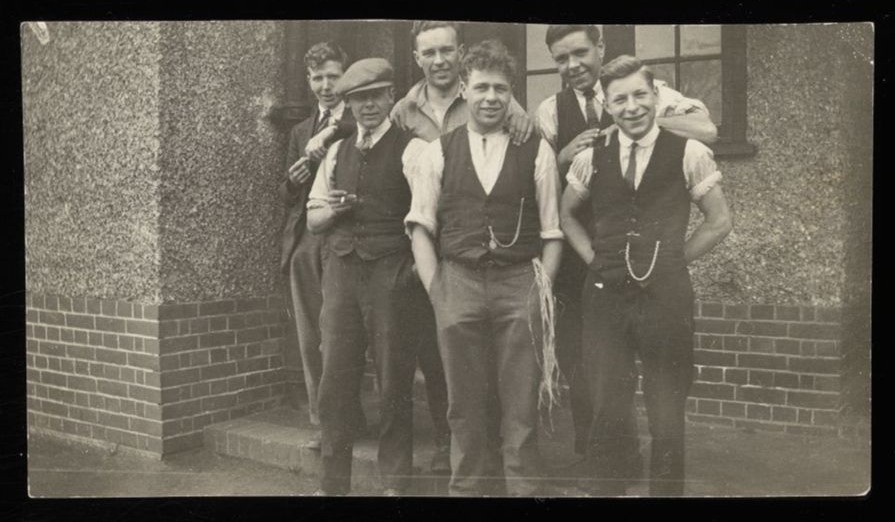
Young gardeners outside the bothy at RHS Wisley, c 1924. (Image courtesy of RHS Lindley Collections)
High expectations
Young gardeners were expected to undertake their own self-directed learning, studying in the evening, after a long day’s work.
A gentleman’s gardener’ would need ‘not only be a good practical botanist, but possess some knowledge of chemistry, mechanics and even the principles of taste… a good hand, spells and points [punctuates] correctly and can compose what is called a good letter.'
Many gardeners clubbed together to buy weekly papers like The Gardeners Chronicle, The Florist and Pomologist or the Journal of Horticulture, so that they could keep up to date with the latest horticultural developments. These gardening periodicals had regular sections deliberately aimed at young gardeners, answering their questions and providing a guide to gardening operations and techniques.
A generous employer might supply the bothy with some gardening books, but some employers even required the young gardeners to buy their own candles so that they could study late into the night. It was not unusual for a journeyman gardener to study every evening, until 9 o’clock at night, trying to learn up to 50 plant names at a time.
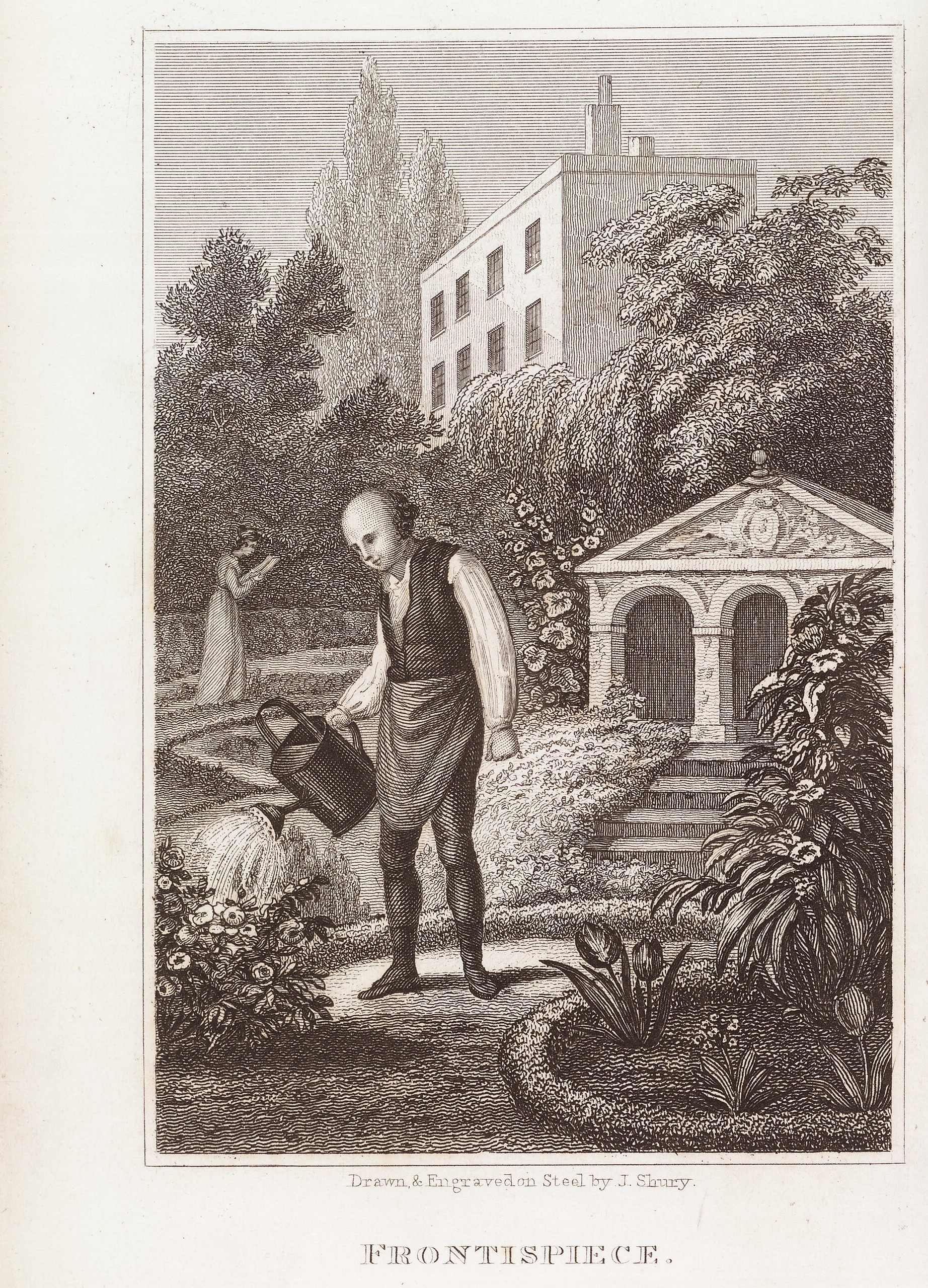
Frontispiece from ‘Every Man His Own Gardener’, by John Abercrombie, published 1815. Abercrombie (1726-1806), was the son of an Edinburgh market gardener, who had worked at Kew and other royal gardens and later established his own market gardens in the London area. (Image courtesy of RHS Lindley Collections)
The next step
If he worked hard, the young gardener could progress to the next step on the horticultural ladder and become an Under Gardener or a Foreman. This meant he was put in charge of a small team looking after a particular section of the garden, for example the Kitchen Garden, Flower Garden, Hothouses, or Fruit Garden. Promotion depended on having a good reference from the head gardener and the garden owner. If for any reason he did not receive a good reference, he would be forced to scratch a living as a ‘jobbing gardener’, looked down on by nearly everyone in the horticultural world. A jobbing gardener worked independently or for a nursery business, working single handed across one or more smaller gardens.
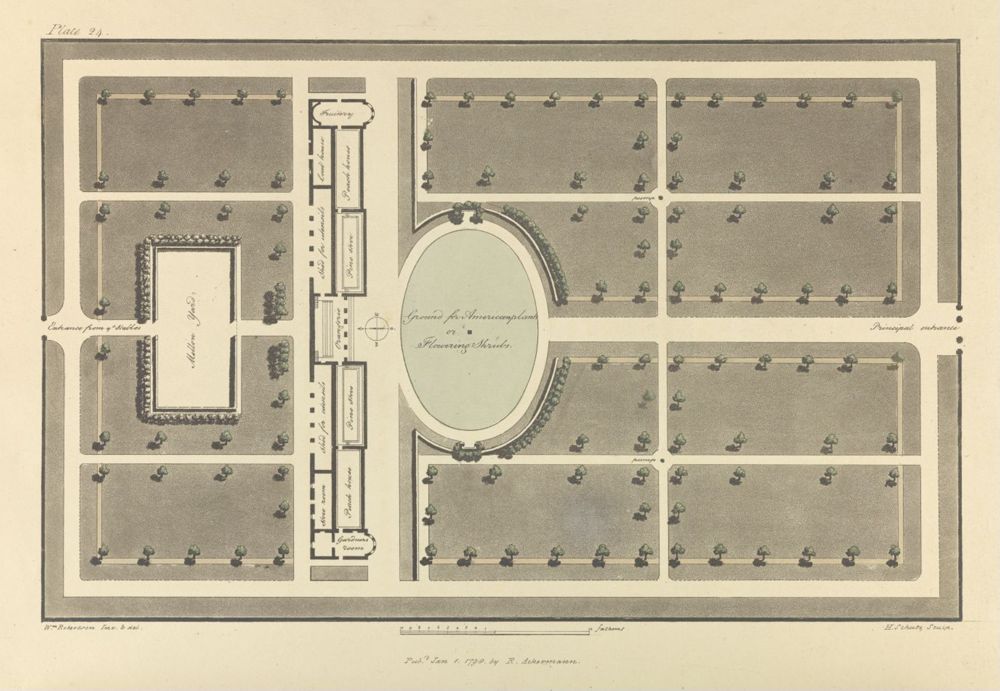
Kitchen garden plan from 'A collection of various forms of stoves' by William Robertson 1798. (Image courtesy of RHS Lindley Collections)
Top of the ladder
At the top of the tree was the head gardener in charge of a large country house garden. This type of garden was effectively a substantial business, and the head gardener was a respected position. In charge of 30 or 40 men they were responsible for creating seasonal displays of tens of thousands of plants, not to mention providing food for a large household. In such a role, it was at last possible for him to marry and raise a family, as his wage had risen and he would be given his own house, often built into the walls of the kitchen garden so that he had the opportunity for round the clock supervision.
Labouring for immortality?
In 1860 the Gardeners Chronicle reported that improvers could be on as little as £20 a year, journeymen on £36. Even a head gardener in a large garden could only expect a salary of around £100 a year. This would compare with a salary of around £110 for a head clerk. Gardeners would expect to work a 60-hour week, Monday to Saturday from 6am to 6pm with an hour for breakfast and dinner. When the growing season was in full swing, they could work even longer hours – a 4am start was not unknown.
Rewards
Why did they put up with this – studying and working long hours for wages that were little more than those that unskilled labourers could achieve? What shines through, reading their letters, diaries and biographies is the enjoyment and dedication they felt for their plants and gardens. The horticultural world also celebrated and rewarded this passion with a wide array of horticultural shows, ranging from the local to the international. Even if it was unlikely that he would make a fortune, a creative gardener could enjoy a degree of fame and even immortality in the form of plants named in his honour.
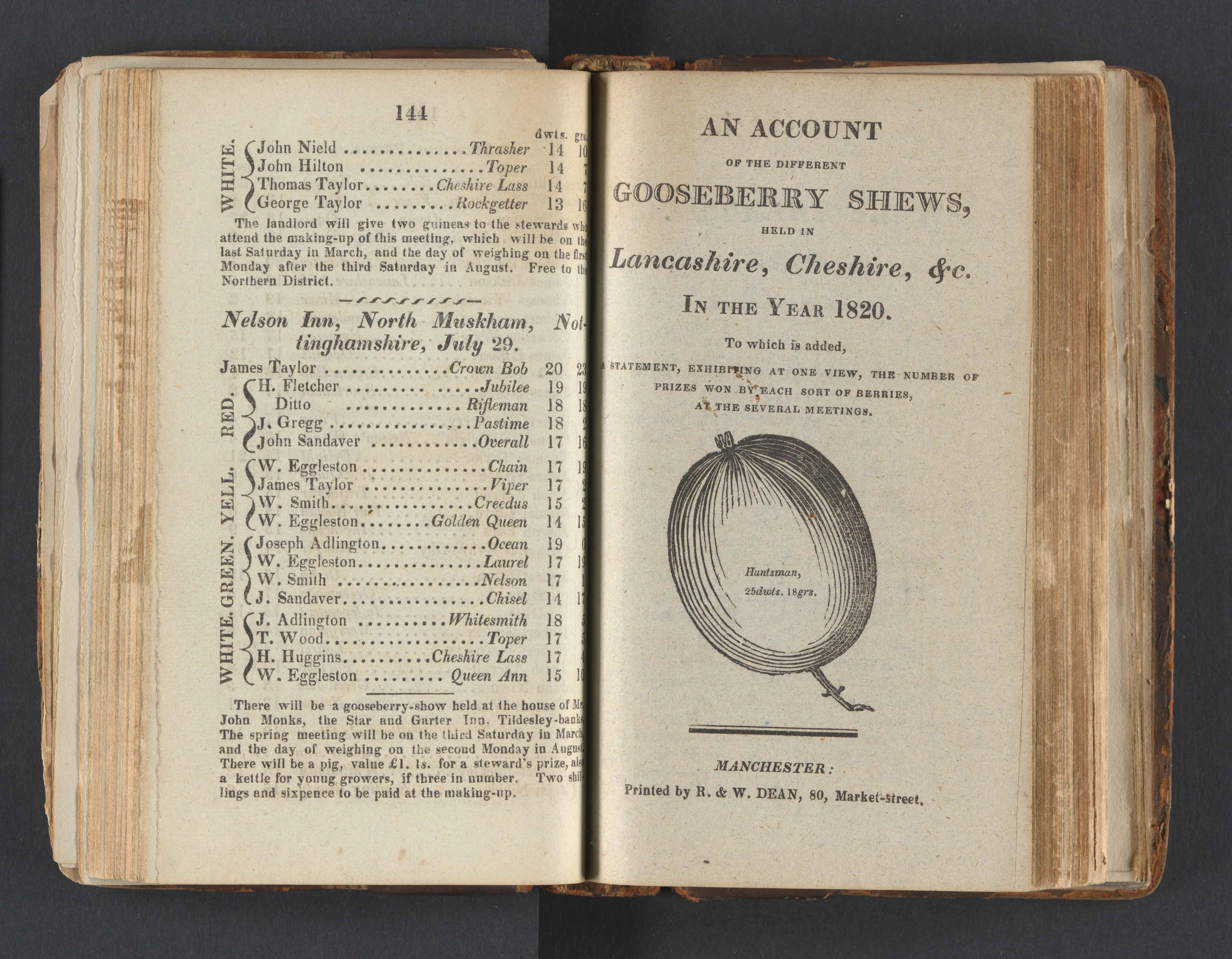
'An account of the different gooseberry shews held in Lancashire, Cheshire, &c. In the year 1820. To which is added, a statement, exhibiting at one view, the number of prizes won by each sort of berries, at the several meetings’. (Image courtesy of RHS Lindley Collections)
Find out more
RHS Lindley Library holds world-renowned collections of rare and modern books about horticulture, botanical art, photographs, as well as the archives of the RHS.
- RHS Lindley Library – explore more of their remarkable collection and upcoming events.
- The Hidden Horticulturalists - discover more with Fiona's book on the working-class men who shaped Britain's gardens.
- An Almost Impossible Thing - discover more with Fiona's book on the radical lives of Britain's pioneering women gardeners.
- National Gardening Week 2026 - explore more resources and events across the country from 27 April to 3 May.
Some collection highlights for studying historic gardeners:
- Gardeners’ cartes de visite – remarkable portraits of nurserymen, amateur growers of florists' flowers, garden designers, professional gardeners, botanists, RHS officials, and entomologists of the 19th century.
- ‘Handwriting of under gardeners and labourers' - Read the CVs of young gardeners recruited to work at the Society’s garden in Chiswick in the 1820s
Everyday Histories
- Everyday Histories theme hub - be inspired by more stories and resources with this year's festival theme.