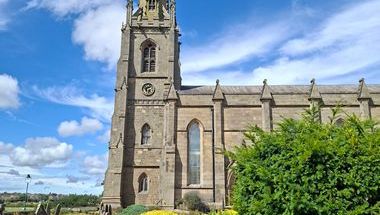
St John the Evangelist Church, Lund, Clifton, PR4 0ZE
St John the Evangelist Parish Church, Lund, Church Lane, Clifton, Lancashire, PR4 0ZE
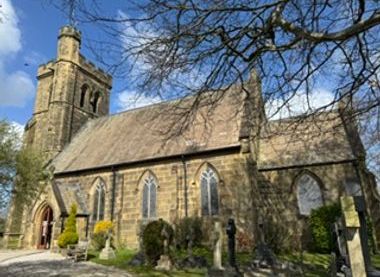
The name Lund is derived from the Old Norse “lundr” and Old Swedish “lunder” meaning grove or a copse. The site of the church is very near to Danes Pad an old Roman Road. The first reference for a church as a place of worship was in 1349 when Sir William Clifton obtained a licence for an oratory. Little is known about Lund until 1550 when the church became the property of King Edward VI.
It is known that in 1662 the priest-in-charge the Rev Joseph Harrison was ejected at the time of the Restoration. From that time onward, there was no regular curate until 1732 when a master from Kirkham Grammar School conducted the services.
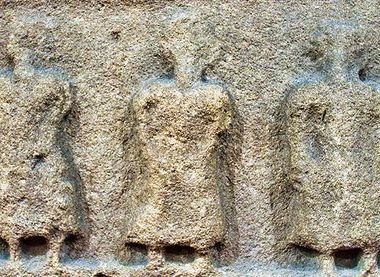
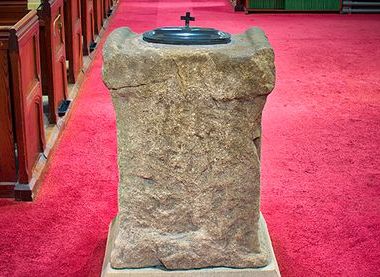
In 1668 Matt Hall, a Church Warden from Kirkham, created a Baptismal Font in Lund Chapel that soon became know as the “Scandalous Trough”. The plinth of the font is of Roman origin some 1,600 years old and had been a pagan altar. Hence the 'scandal' that was caused by bringing a pagan artifact into a Christian chapel. On three sides of the plinth are sculptured images of pre-Christian mother gods. The fourth side is rough-hewn which suggests that it stood against a wall.
The font continues to be used to this day for all baptisms in Lund Parish.
St John the Evangelist Parish Church, Lund, Church Lane, Clifton, Lancashire, PR4 0ZE