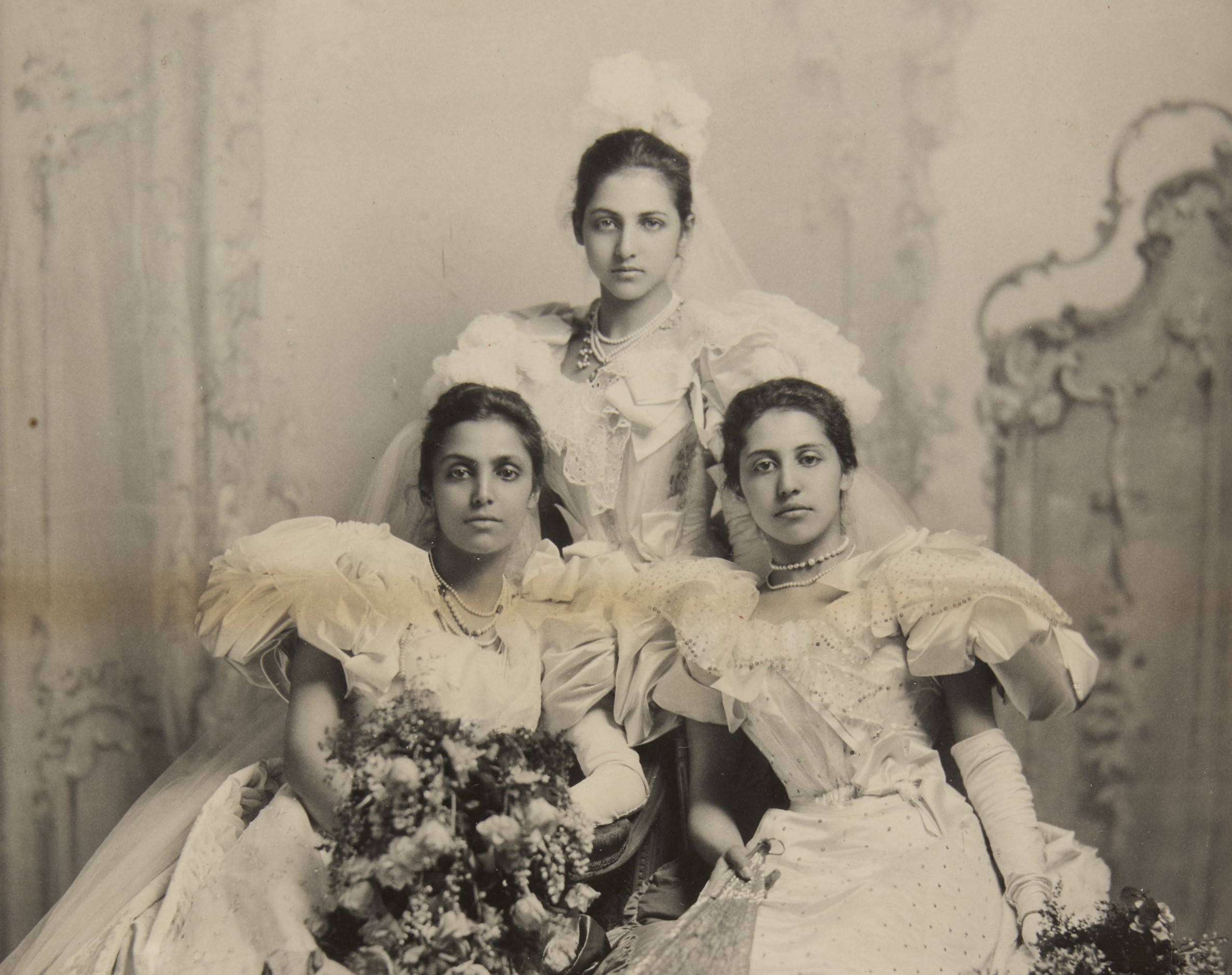
Princesses Sophia, Catherine and Bamba Duleep Singh photographed by Harry Vandre-Weyde as debutantes in 1895. A beautiful image, but two sisters are missing. (© Peter Bance Collection)
**CONTENT WARNING - references to suicide. If you are struggling, please call Samaritans free on 116 123.**
2026 marks the centenary of the last-born Princess of Punjab’s tragic death by suicide. Princess Irene Duleep Singh’s story is poignant and powerful, and it has taken me from a museum in Lichfield to a palace in London. I first shared my research about 'A Forgotten Princess' as part of last year's Heritage Open Days at Erasmus Darwin House in Staffordshire. This stands opposite Lichfield Cathedral, which houses a memorial to the soldiers of the 80th Regiment of Foot who were lost fighting against the Sikh Empire in the First Anglo-Sikh War, a conflict that ended with the annexation of the Punjab and the exile of Irene's father, the child king Duleep Singh. To research and speak about Irene in the shadow of that memorial felt quietly charged, knowing that more was to come, and needed to be highlighted.
'The Last Princesses of Punjab'
I was aware that Kensington Palace had an exhibition in development about Princess Irene Duleep Singh's half-sisters with a working title something along the lines of "Princesses of Resistance", presumably about their suffragist and suffragette activities. So, I was surprised when Historic Royal Palaces' next press release revealed the exhibition would be called "The Last Princesses of Punjab". It would tell the story of Princess Sophia Duleep Singh and five women who shaped her:
- Maharani Jind Kaur - her grandmother
- Queen Victoria - her godmother
- Maharani Bamba - her mother
- Princesses Bamba and Catherine - her sisters from her father’s first marriage
For an exhibition titled "The Last Princesses of Punjab" there was not yet any mention of Sophia's half-sisters, Princesses Irene and Pauline, the two children known to have been born to Maharaja Duleep Singh from his second marriage and, by simple chronology, the actual last-born princesses of Punjab.
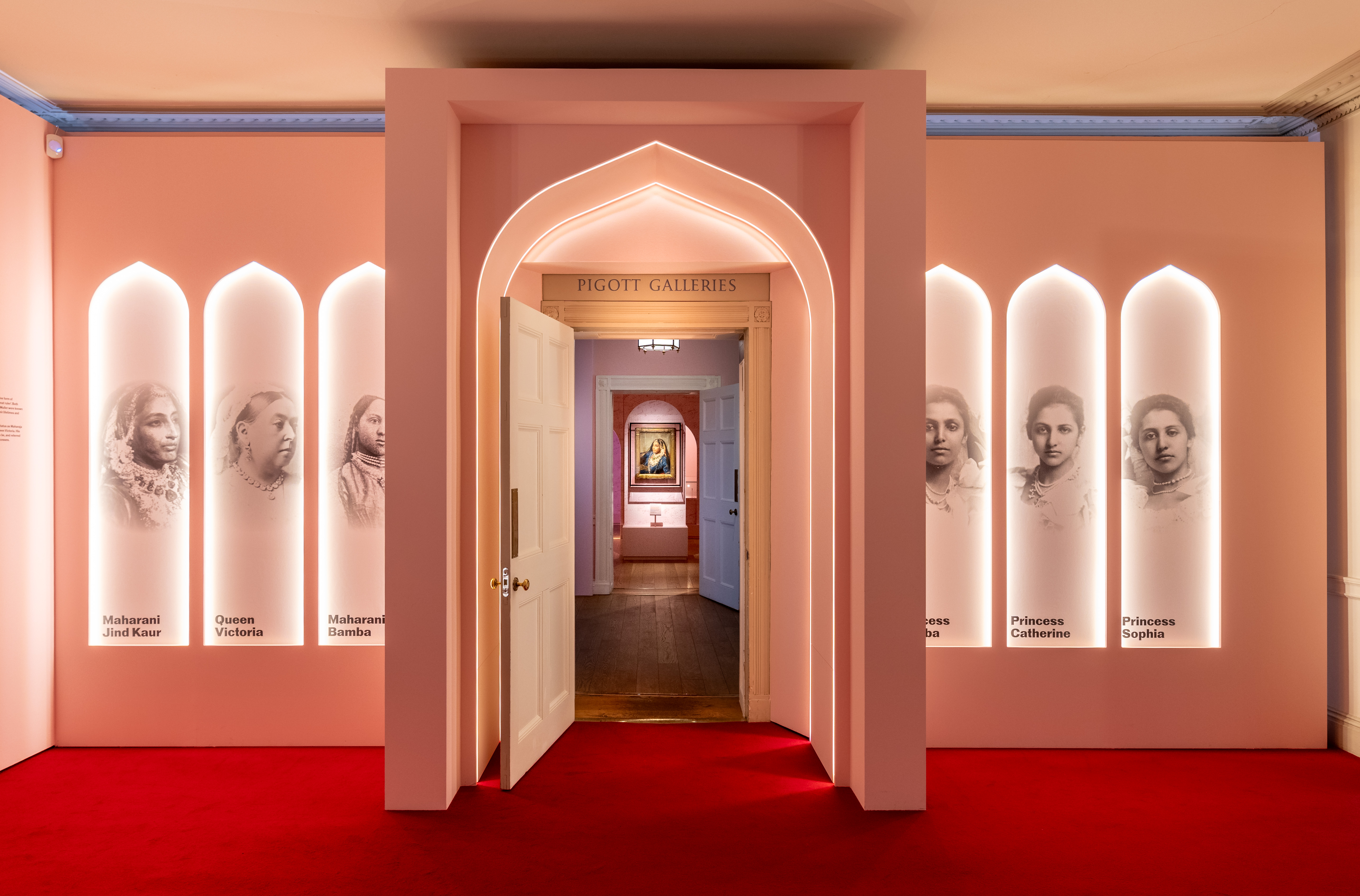
The Last Princesses of the Punjab exhibition at Kensington Palace, London. (©Historic Royal Palaces)
What's in a name?
Press reports are the lifeblood of so much historical research. Accuracy at the point of publication is important because those reports become the evidence later generations rely on. So I kept a close eye on press reporting, and the risk of Princess Irene in particular, being inadvertently erased from the record.
My concern came to fruition when Tatler published a celebration of Princess Sophia describing her as "the final princess of Punjab". It was a well-intentioned piece, but the phrase sounded historically incorrect to me. The use of "the final princess" made it a definitive historical claim, and in a history that is not widely known, most readers would take it at face value, especially in a reputable publication like Tatler. I wrote to the magazine, highlighting that all five of Maharaja Duleep Singh's daughters hold equal claim to the title of Last Princess of Punjab. Sophia, born in 1876, was the third. The fifth and last-born was Princess Irene, born in 1889.
Tatler responded constructively and amended the article. Being the centenary of Irene’s tragic death made this feel particularly important. A hundred years on, I want to give Irene the dignity she was denied at the time of her untimely and tragic death.
Reported in both national and international press in 1926 and again during the probate proceedings over her estate, Princess Irene Duleep Singh's story is one of the most devastating in the Duleep Singh archive (and that speaks volumes for a family already mired by trauma and tragedy). In Princess Irene Duleep Singh’s final letter, written on 8 October 1926, the day she died by suicide, Princess Irene wrote "I am homeless", a devastating contrast with her half-sisters, who were granted a grace-and-favour home at Faraday House, Hampton Court Palace, which now has a blue plaque recognising Princess Sophia as a suffragette.
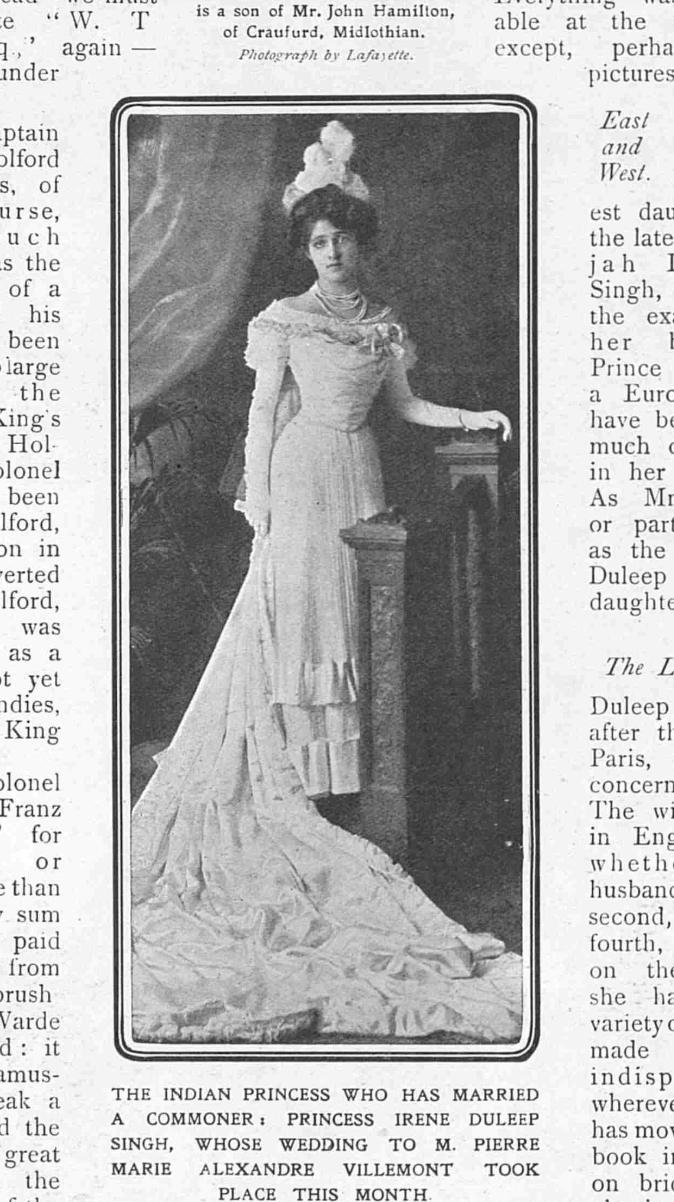
Princess Irene Duleep Singh's wedding portrait, taken by Ellis & Walery, society photographers renowned for their portraits of aristocracy and royalty. (Pre-1944 public domain: The Sketch, 30 March 1910. © Illustrated London News Group. Courtesy of The British Library Board. Via British Newspaper Archive)
'Do justice to me'
It was this proactive correction with Tatler, and my bringing the centenary of Princess Irene Duleep Singh's death to the attention of Historic Royal Palaces, that led to an invitation to the press preview of "The Last Princesses of Punjab" at Kensington Palace.
I was advised that Princesses Pauline and Irene were included in the exhibition, but minimally, as the focus was on Princess Sophia Duleep Singh. 2026 marks Sophia’s 150th birthday, and she had the strongest connection to Historic Royal Palaces as Queen Victoria's goddaughter and resident of a grace-and-favour home at Hampton Court Palace.
As I had been forewarned, the section about Princesses Pauline and Irene was modest in scale. Their faces did not appear in the family tree that named them, the focus being on the six women central to the exhibition. One picture of Pauline and one of Irene appeared alongside a banner explaining their part in the story. It did not do their story full justice, but it explained, with candour, why justice had not been done: "Queen Victoria never recognised Pauline and Irene as legitimate heirs so they did not enjoy the support she showed to his [Maharaja Duleep Singh's] other children."
That sentence stopped me. It juxtaposed in my mind with the words of the princesses’ grandmother, Maharani Jind Kaur, written in gold lettering above a doorway and facing her 1863 portrait by George Richmond: "Do justice to me."
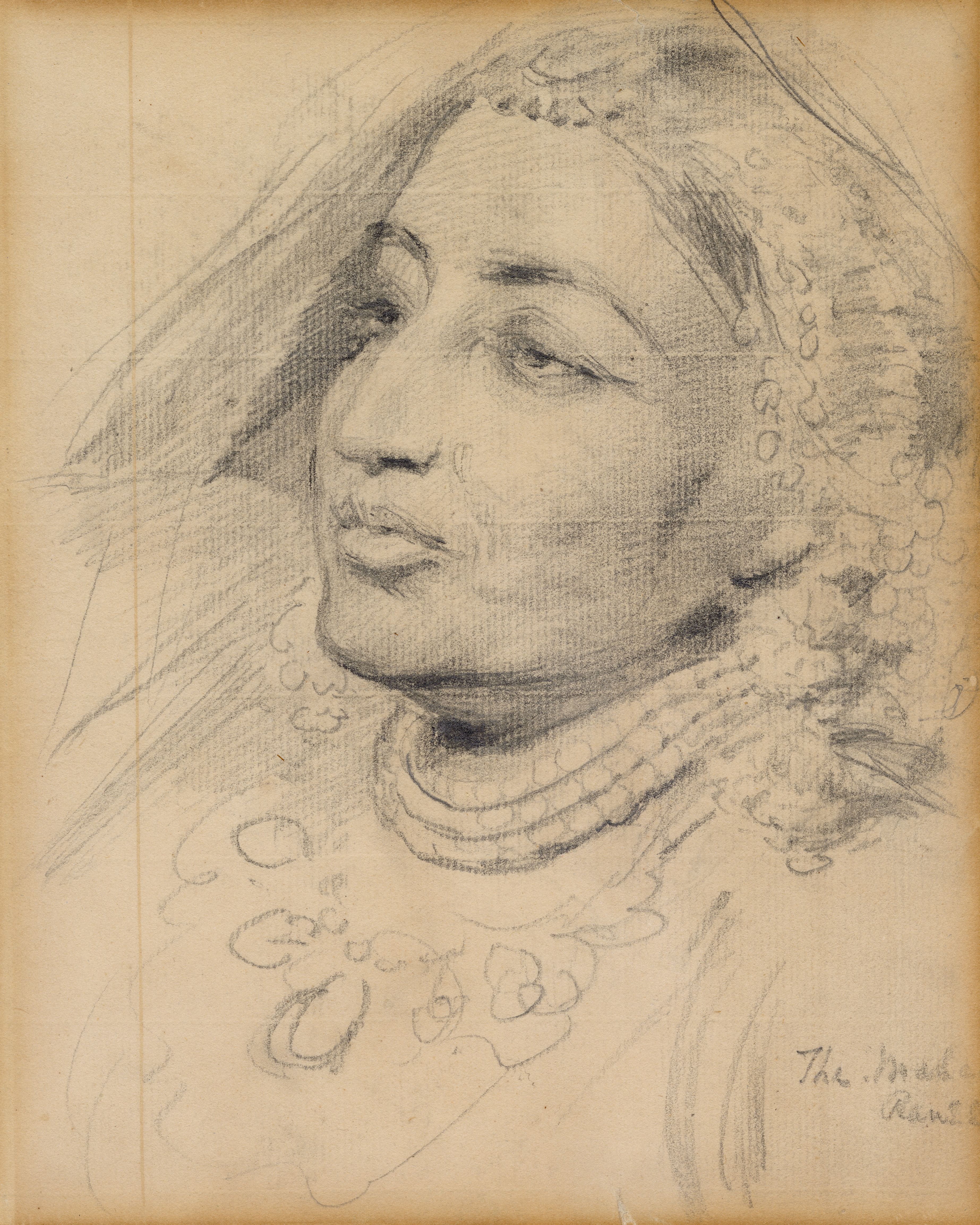
A preparatory sketch for the portrait of Maharani Jind Kaur (1817–63) drawn in 1863 by the British artist George Richmond. (© Toor Collection)
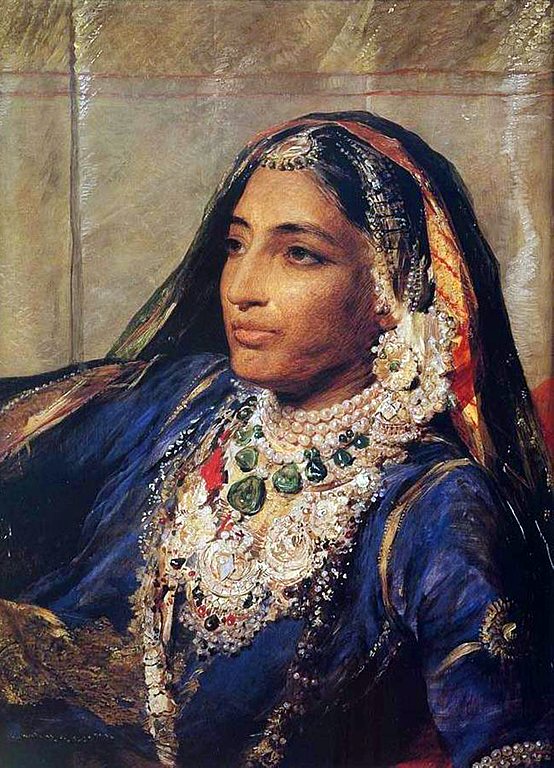
'Do justice to me' - George Richmond's portrait of Maharani Jind Kaur, which hangs in the exhibition. (© Painting of Pictures From History / TopFoto)
Maharani Jind Kaur was, like Irene's mother Ada Douglas Wetherill, not a first wife. She was in fact the youngest of Maharaja Ranjit Singh's approximately 46 wives. By her reckoning, I imagine, she had five granddaughters, not three. After all, it is Maharani Jind Kaur who is the matriarch of this line, not Queen Victoria.
Five granddaughters is also befitting of the exhibition's title, because Punjab means Land of Five Rivers. A river of Punjab for each granddaughter.
Every last princess
Standing in the exhibition, I found myself thinking about Princess Irene's final letter to her trustee, written shortly before she died: "I leave all I possess to the Dr. Barnardo's Home for the poor children." The last-born princess of Punjab, homeless, spending her final hours thinking of children in need. The juxtaposition with an exhibition that centres three of the five princesses, however lovingly, stayed with me. It brought to mind the Every Child Matters initiative, the landmark UK policy launched in 2003 in response to a child who fell through the gaps of a system that should have seen her. Every child matters. Every last princess of Punjab matters too.
And there is a twist worth savouring. Women born of Punjabi, particularly Sikh, heritage traditionally carry the name Kaur as a middle name or surname, from Maharani Jind Kaur to myself and even my daughter of mixed heritage. Kaur means Princess. Every last one of us matters.
I strongly recommend visiting the Kensington Palace exhibition. Take in every detail. May it be a gateway to more.
Because every last Princess of Punjab matters.
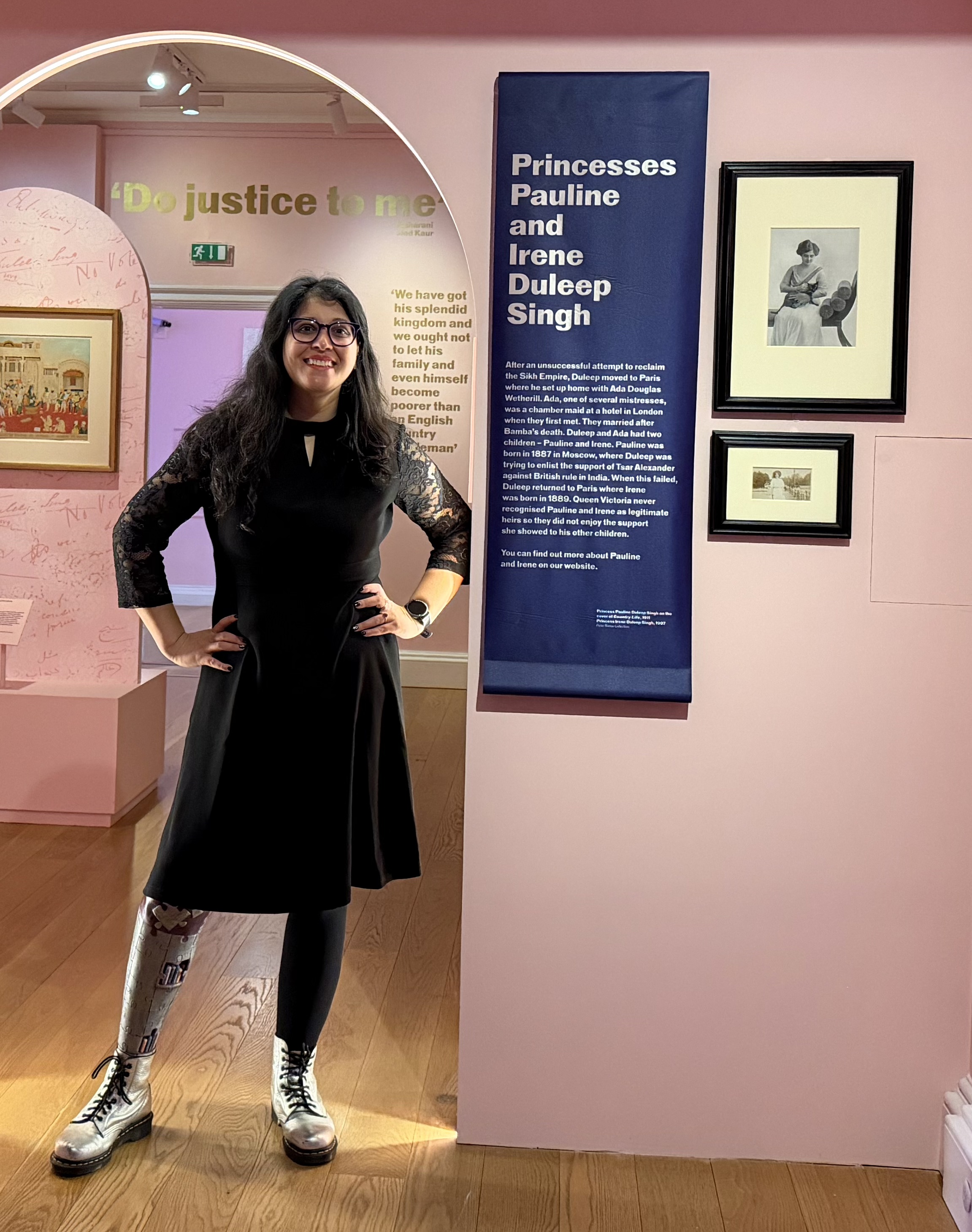
‘Do justice to me’ – Sundeep at the exhibition, beside the panel about Irene, with the quote from Maharani Jind Kaur in gold letters behind her.
Find out more
- The Last Princesses of Punjab exhibition – Explore Historic Royal Palaces' new exhibition that brings together rarely seen objects and personal stories to illuminate the extraordinary life of Princess Sophia Duleep Singh.
- Follow Sundeep Braich on Instagram – Follow Sundeep for the latest news of her research.
- Festival case study: A Forgotten Princess – Read about Sundeep’s Heritage Open Day event.